

 2026.09.18
 Industry News
Content
Anti fog wipes for eyeglasses are one of those small items that can make a surprisingly big difference. If you wear glasses, you know the frustration: stepping into a warm room from the cold, wearing a face mask, or opening a hot oven can leave your lenses cloudy in seconds. A good anti fog wipe will not change the physics of condensation, but it can change how moisture behaves on your lenses, keeping your vision clearer for longer.
In this guide, we will explain why glasses fog up, how anti fog wipes work, how to use them correctly, and what to look for when buying. We will also share a few manufacturing insights, because as a producer of cleaning wipes, we have seen what separates a reliable product from one that disappoints.
Fog is simply condensation. When warm, moist air meets a cooler surface, the water vapor in the air condenses into tiny droplets. In the case of eyeglasses, your breath, your body heat, or a humid environment provides the moisture. The lens surface is usually cooler than the air around it, especially when you move between different temperatures. Those tiny droplets scatter light, which is why everything looks blurry and hazy.
The science is straightforward but worth understanding. Fog forms when the lens surface is cooler than the dew point of the surrounding air. Your breath carries moisture and heat. When that warm, humid air hits a cold lens, the water vapor condenses into micro-droplets. These droplets are large enough to scatter light, which is why everything looks blurry. The tighter the temperature difference and the higher the humidity, the worse the fog.
Airflow also matters. If air can move freely around the lenses, moisture evaporates before it builds up. That is why glasses fog less when you are outdoors on a breezy day and more when you are wearing a tight-fitting mask. The fit of your frames, the shape of your face, and even the type of lens coating can all influence how quickly fog appears.
Most anti fog wipes leave a thin, invisible film on the lens. This film is hydrophilic, meaning it attracts water. Instead of forming separate droplets, moisture spreads into a uniform, transparent layer. You still have moisture on the lens, but it no longer scatters light in the same way. The result is clearer vision with less haze.
Some wipes use mild surfactants, while others rely on silicone-based or polymer-based ingredients. The best formulas are balanced: effective enough to reduce fog, gentle enough not to damage anti-reflective coatings. Some wipes also include cleaning agents that lift fingerprints, dust, and skin oils. That dual action is important: a lens with oil or dirt will fog unevenly, because the film cannot spread evenly across a contaminated surface. So the best anti fog wipes clean first, then leave a protective layer.
Not all wipes are equal. The wrong product can leave streaks, feel greasy, or even harm your lenses over time. Here are the features that matter most.
| Feature | Why It Matters |
|---|---|
| Lens-safe formula | Alcohol-free or low-alcohol options reduce risk to anti-reflective and other coatings. |
| Streak-free finish | Residue or streaks can be as annoying as fog itself. |
| Individually wrapped | Keeps wipes moist and portable for travel, work, or outdoor use. |
| Material quality | Soft nonwoven fabric avoids scratching and leaves no lint behind. |
| Duration of effect | Some last a few hours, others a full day depending on conditions. |
Pay attention to packaging as well. A wipe that dries out in the packet is useless. Foil or high-barrier film pouches keep the liquid fresh. If you buy in bulk for a team or a store, check the expiration date and storage conditions.
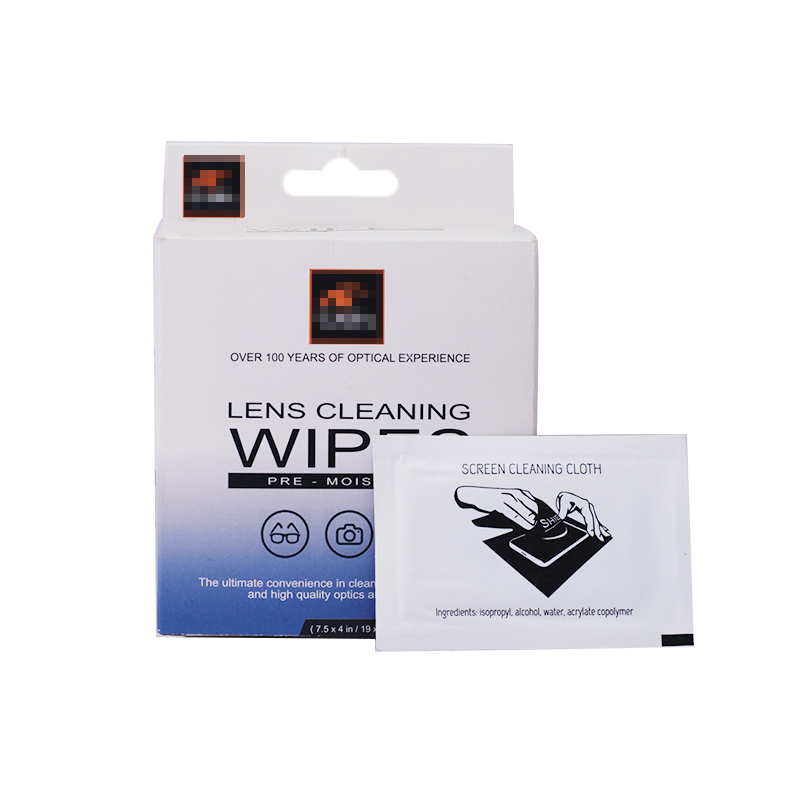 Anti-fog Glasses Screen Cleaning WipesLong-lasting anti-fog, clear with just one swipe, no fear of temperature differencesView Product →
Application matters as much as formula. Follow these steps for the best results:
If you want to understand why ordinary tissue can harm lenses, see our guide on screen and glasses wipes.
Most modern eyeglass lenses have coatings: anti-reflective, scratch-resistant, UV, or blue-light filters. A well-formulated anti fog wipe is designed to be compatible with these. However, some ingredients can be problematic. Avoid wipes that contain ammonia, harsh solvents, or abrasive particles. If your lenses are very old or have damaged coatings, test a small area first.
If you wear glasses with specialty coatings, such as blue-light filters or photochromic lenses, check the manufacturer's guidance or test on a small area. In our experience, most quality anti fog wipes are safe, but formulation matters. A wipe that is too aggressive may leave a haze or weaken the coating over time.
At our factory, we test formulas on common lens substrates before they go into production. This is part of our quality process, because a wipe that cleans well but damages lenses is not a good product.
Each option has a place. Here is a quick comparison to help you decide.
For most people, a pack of anti fog wipes in a bag or desk drawer is the simplest solution. They are easy to carry and easy to use. You do not need to measure liquid or find a clean cloth at the moment you need it.
They are especially useful in these situations:
They are also helpful for people who wear safety glasses at work, or for anyone who uses a camera viewfinder or microscope. The principle is the same: reduce surface tension so moisture spreads instead of forming droplets. In extreme conditions, no wipe will eliminate fog forever. But a good anti fog wipe can significantly reduce how often you need to stop and clear your lenses.
If you are sourcing anti fog wipes for eyeglasses for retail, hospitality, or promotional use, formulation and packaging are the two biggest decisions. You need a wipe that performs consistently, feels pleasant, and carries your brand well. Individually wrapped wipes are popular for travel kits and sample giveaways, while multi-pack canisters suit optical shops and office supply channels.
When developing an anti fog wipe, we consider the target market. A product for optical retail may need a premium feel, a mild scent, and a specific wipe size. A product for industrial safety may prioritize durability and larger wipe dimensions. The liquid formula can be adjusted for different climates and lens types. This flexibility is why many brands choose to work directly with a manufacturer rather than buying generic stock.
As an OEM/ODM manufacturer, we support private label projects with custom wipe size, liquid formula, packaging design, and carton configuration. Our factory in Haining, China, operates automated lines with a daily output of over 600,000 pieces. For a deeper look at the private label process, see our complete business guide.
Anti fog wipes for eyeglasses are not magic, but they are a practical, low-cost way to keep your vision clear. They work by changing how moisture spreads across the lens, and they are most effective when you use them correctly and choose a lens-safe formula.
Whether you are a consumer looking for a better daily routine or a business sourcing private label wipes, the key is to match the product to the environment. Keep a pack nearby, use it gently, and you will spend less time fighting fog and more time seeing clearly.
If you have questions about formulation, packaging, or bulk supply, our team is happy to share what we have learned from years of making cleaning wipes. Clear vision is a small comfort, but it makes a big difference in daily life.

Wet Wipes OEM/ODM, Custom Wet Wipes Manufacturers in China. We are making wet wipes enter every household and become an essential part of our daily life, and are making unremitting efforts to create a cleaner and more comfortable home environment.
Read MoreFor exclusive deals and latest offers, sign up by entering your email address below.


 English
 русский
 عربى
عربى