 2026.04.22
 Industry News
Content
Most people reach for the nearest tissue or paper towel when their glasses fog up or their phone screen gets smudged. It feels harmless — a quick wipe, and the job is done. But this everyday habit is one of the most common causes of permanent lens and screen damage. Regular tissue is not a safe cleaning tool for optical surfaces, and understanding why can save you from costly replacements and blurry vision.
Tissue paper feels soft to the touch, but at a microscopic level, it is made from wood pulp fibers — and those fibers are harder than the coatings on your lenses and screens. When you wipe a lens with tissue, these fibers drag across the surface like microscopic sandpaper, leaving behind a network of hairline scratches invisible to the naked eye.
The problem compounds with each wipe. Research in optical care has shown that lens clarity can degrade significantly after repeated cleaning cycles using fabric or paper-based materials. Once these micro-scratches accumulate, they scatter incoming light, causing subtle glare, eye strain, and a general haze that cannot be polished or repaired. Scratches on plastic or polycarbonate lenses are permanent — no optical laboratory will attempt to buff them out.
Tissue also traps dust and grit between its fibers during use. If any loose debris is sitting on your lens when you start wiping, the tissue effectively drags those hard particles across the surface, multiplying the abrasive damage with every stroke. The circular scratch patterns many glasses wearers notice are a direct result of this mechanism.
Modern lenses — whether on eyeglasses, sunglasses, or camera optics — are rarely bare plastic or glass. They carry one or more ultra-thin protective and functional layers: anti-reflective (AR) coatings, blue-light filters, UV-blocking films, oleophobic (oil-repelling) surfaces, and hydrophobic treatments. These coatings are measured in nanometers, making them extraordinarily sensitive to both physical abrasion and chemical attack.
Regular tissues present both risks simultaneously. The fiber abrasion described above physically degrades the coating surface. At the same time, many commercially available cleaning wipes and household paper products contain trace amounts of lotions, fragrances, or chemical binders that can react with these coatings. Even the mild pH of certain tissue formulations can, over time, weaken the adhesion between coating layers and the lens substrate.
Solvents are another hidden danger. Isopropyl alcohol, acetone derivatives, and ammonia — found in generic "cleaning wipes" not formulated for optics — dissolve the binding agents that hold AR and anti-scratch coatings to the lens. The damage is cumulative and often goes unnoticed until the coating visibly peels, clouds, or develops persistent hazing that no amount of cleaning will fix.
Smartphone displays, laptop screens, and tablet panels face identical risks from improper cleaning, even though their construction differs from eyeglass lenses. Most modern screens are covered with an oleophobic coating designed to resist fingerprints and smudges. This layer is thin, delicate, and highly reactive to abrasive materials.
Polycarbonate lenses and OLED display panels both rank low on surface hardness compared to traditional glass. Wiping either with tissue — even premium facial tissue — introduces micro-abrasions that gradually dull the display's vibrancy and reduce touch sensitivity coating effectiveness. Once the oleophobic layer on a phone screen is stripped away, fingerprints become permanent-looking smears that resist cleaning.
The shared lesson is straightforward: any optical surface — whether it corrects your vision or displays your content — requires a cleaning material specifically engineered for that job. The convenience of tissue comes at the cost of progressive, irreversible damage.
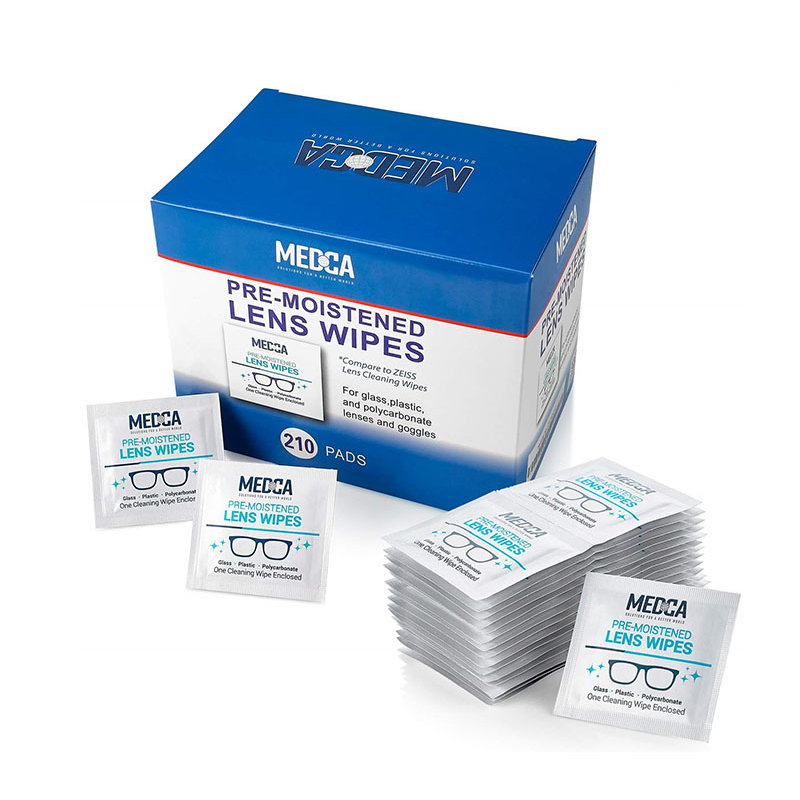
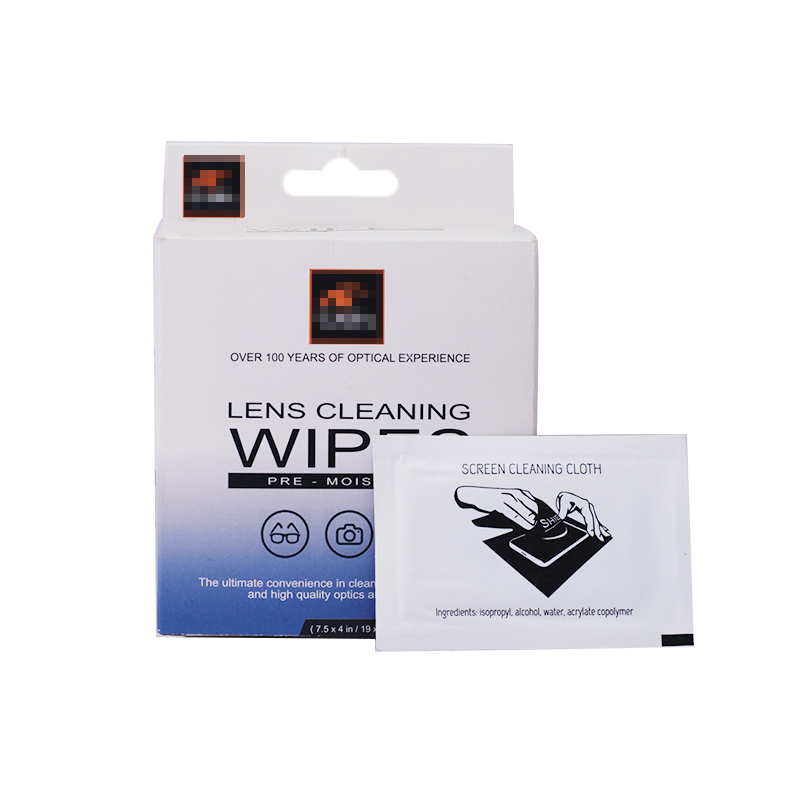
A purpose-built glasses screen cleaning wipe differs from a standard wet tissue in several critical ways. Understanding these differences helps you evaluate any product before trusting it with your lenses.
These specifications are not marketing language — they are engineering requirements that directly determine whether a wipe protects or damages the surface it touches.
Even with the right wipe in hand, technique matters. Following a consistent process reduces the risk of trapping abrasive particles under the wipe and ensures an effective, streak-free result.
Whether you are a consumer selecting a product for personal use or a brand looking for wet wipes OEM customization at scale, the following checklist covers the specifications that matter most for screen and glasses cleaning applications.
| Specification | What to Look For | What to Avoid |
|---|---|---|
| Wipe material | Non-woven microfiber or microfine cellulose | Standard tissue paper, cotton, or rough-woven fabrics |
| Cleaning formula | Alcohol-free or low-alcohol, pH-neutral, surfactant-based | High-concentration IPA, ammonia, acetone, or household glass cleaner |
| Lint performance | Lint-free, leaves no visible residue | Products that shed fibers or leave white flecks |
| Packaging | Individually wrapped, foil or multi-layer sealed | Open-tub formats where wipes dry out or become contaminated |
| Coating compatibility | Explicitly stated as safe for AR, anti-scratch, oleophobic coatings | Generic "multi-surface" wipes with no optical safety claim |
| Certifications | ISO, CE, or equivalent optical safety certification where applicable | No stated compliance with any relevant standard |
For businesses sourcing screen and glasses wipes in bulk, material consistency and formula stability across production batches are equally important. Working with a manufacturer that maintains full traceability from raw materials to finished product ensures that every wipe in every batch performs to specification. Explore our range of household cleaning wipes for a broader look at how specialized formulations differ across application categories.
The bottom line is simple: your lenses and screens are precision optical surfaces, not kitchen countertops. The cleaning tool you choose should reflect that. Replacing tissue with a properly formulated screen and glasses wipe is one of the smallest changes you can make with one of the most lasting effects on the life and clarity of your eyewear and devices.

Wet Wipes OEM/ODM, Custom Wet Wipes Manufacturers in China. We are making wet wipes enter every household and become an essential part of our daily life, and are making unremitting efforts to create a cleaner and more comfortable home environment.
Read MoreFor exclusive deals and latest offers, sign up by entering your email address below.


 English
 русский
 عربى
عربى