

 2026.08.07
 Industry News
Content
Your cat has just walked through a dusty corner and decided to climb onto your lap. You reach for a pack of antibacterial wipes, but then the question appears: are these wipes safe for a cat that licks its paws within seconds? The short answer is that antibacterial wipes for cats can be safe, but only if the formula, pH, and concentration are designed for feline physiology. A household disinfecting wipe is not a pet wipe, and the difference is more than a label.
Cats groom themselves relentlessly, and any residue left on fur or paws will make its way into their mouth. Their liver is also less efficient at metabolizing certain compounds, particularly phenolic disinfectants and some essential oils. Combined with skin that is thinner and less acidic than human skin, this means a wipe that feels harmless on our hands can be too harsh for a cat. The real goal is not maximum antibacterial effect, but a balanced formula that removes grime without leaving toxic or irritating residue.
Many human antibacterial wipes rely on alcohols, quaternary ammonium compounds, triclosan, or phenolic disinfectants. They work well on kitchen counters, but their concentrations are chosen for hard surfaces and human hands, not for a small animal with a grooming habit. High-strength alcohol dries out sensitive cat skin, leaves a strong scent that can deter or stress a cat, and may cause stinging if the wipe comes near the mouth. Phenolic compounds are especially concerning because cats lack the enzymes needed to break them down quickly.
Even some natural ingredients can be risky. Tea tree oil, for example, has mild antimicrobial properties but contains terpenes that cats may not process well, especially in concentrated amounts. This does not mean every antibacterial wipe is dangerous; it means the formulation needs to be designed for cats from the start.
| Ingredient | Purpose | Concern for cats |
|---|---|---|
| Alcohol (ethanol/isopropanol) | Fast drying and surface disinfection | High concentrations dry the skin and irritate; licking residue can be harmful. |
| Benzalkonium chloride | Broad-spectrum antibacterial activity | Acceptable only at pet-safe low concentrations; household-strength wipes may cause irritation. |
| Phenolic compounds | Disinfectant found in many household products | Poorly metabolized by cats; even small ingested amounts can be toxic. |
| Chlorhexidine | Veterinary antiseptic | Safer when properly diluted; pet wipes should be rinse-free and pH balanced. |
| Essential oils | Natural scent and mild antibacterial claims | Some terpenes are hard for cats to metabolize; avoid tea tree, citrus, and similar oils. |
In practice, a wipe labeled “antibacterial” for pets usually contains a low concentration of a recognized agent such as chlorhexidine or benzalkonium chloride, plus a mild surfactant system and a nonwoven fabric that is gentle on fur. The toxicity risk comes from using household or human formulas that were never adjusted for pets.
Start with the label. A safe antibacterial wipe for cats should state that it is for cats, or at least for pets, and explain what the wipe is designed to do. If the packaging only says “kills 99.9% of bacteria,” do not assume it is pet-safe. Look for a formula that is alcohol-free, fragrance-free, and pH balanced near the neutral range of cat skin.
Alcohol and fragrance are the most common sources of irritation. An alcohol-free cleaning system based on mild nonionic surfactants can lift dirt from paws and fur without stripping skin oils. Preservatives must also be chosen carefully; a low concentration of a pet-approved preservative is acceptable, while heavy antibacterial residues are unnecessary. You may find our discussion of alcohol-free and preservative-free wipe formulas useful when comparing product labels.
The fabric itself should be soft but strong. Cats groom by licking, so the last thing you want is lint or torn fibers stuck to the fur. Compare the wipe to a baby wipe: it should not shred under light pressure, and it should be large enough to clean a paw without your fingers touching the grass or dust directly. If you want to explore how different nonwoven materials behave, our wet wipes material guide compares polypropylene, viscose, cotton, and bamboo.
If the ingredient list is unclear, contact the manufacturer. A reputable pet wipe producer should be able to confirm whether the formula has been tested for skin irritation and whether it is safe for cats that lick themselves.
From a production standpoint, making a wipe that is both antibacterial and safe for cats is a fine balancing act. The disinfecting agent has to be effective in the pack, but it must not leave a harmful residue at the concentration you apply to a paw. The liquid also needs to match the nonwoven material: too much wetness can make the wipe drip into the eyes; too little can leave dirt on the fur. That is why pet wipe production involves not just filling machines, but careful control of formula pH, wetting ratio, and packaging seal integrity.
For brand owners entering the pet category, the same balancing act applies. You need a supplier that understands pet-specific safety requirements and can document the rationale behind the formula. Our OEM wet wipe manufacturing and compliance guide outlines the cost and labeling decisions you will face when developing a private label product.
For cat owners who want an established option, we manufacture pet wipes in two configurations. The first is our natural-ingredient pet wipes, which avoid most synthetic additives and are well suited for sensitive skin. The second is a universal pet wipe for cats and dogs, designed for households with multiple pets and for everyday paw and fur wiping.
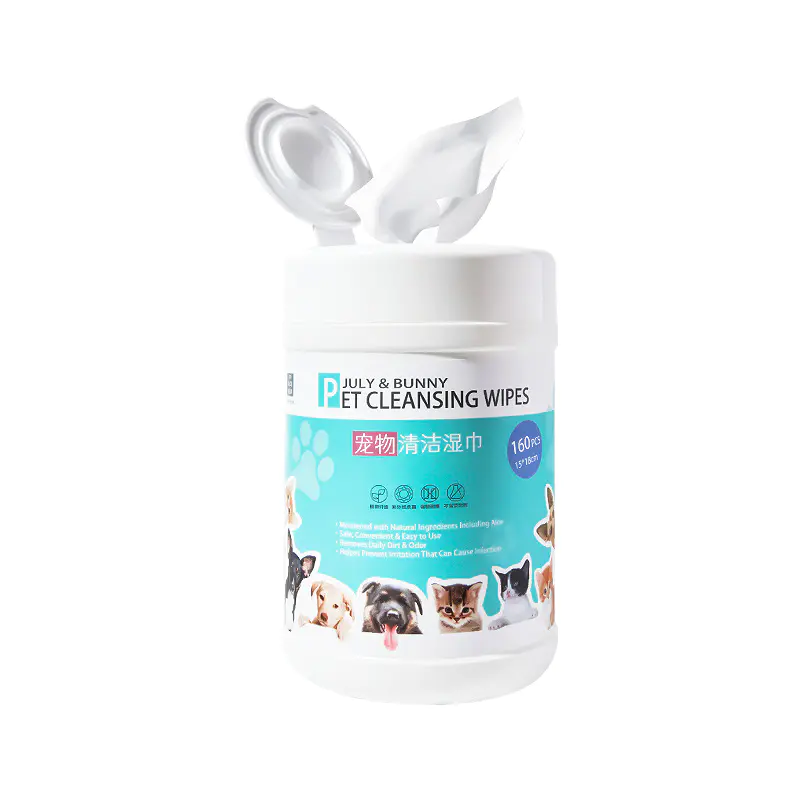 Universal Pet Wipes for Cats and Dogs Suppliers, Company - HAINING LILY CLEANINGLILY CLEANING PRODUCTS is China Universal Pet Wipes for Cats and Dogs Suppliers and Company, Wholesale Universal Pet Wipes for Cats and D...View Product →
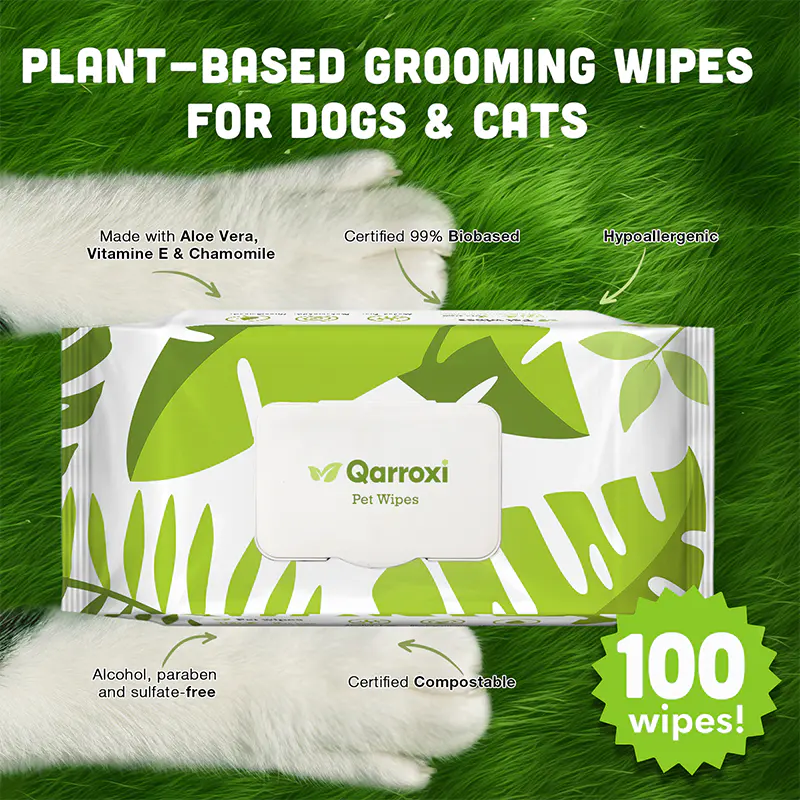 Natural Ingredient Pet Wipes Suppliers, Company - HAINING LILY CLEANING PRODUCTSLILY CLEANING PRODUCTS is China Natural Ingredient Pet Wipes Suppliers and Company, Wholesale Natural Ingredient Pet Wipes online, Origin...View Product →
Both products are made on automated lines with strict quality checks, but the core point is the same: pet-safe antibacterial wet wipes are not a marketing afterthought. They are engineered around the cat’s anatomy and behavior.
Even a well-chosen wipe can cause a problem if it is used in the wrong area or with the wrong technique. A slow, calm approach works best.
Wipes are for day-to-day dirt, dander, and light odor. They are not a treatment for open wounds, skin infections, or allergic reactions. If your cat has redness, swelling, scabs, or a persistent smell, stop using wipes and consult a veterinarian. A wet wipe can keep the fur clean, but it cannot replace medical diagnosis.
Sustainable hygiene is a habit, not a single product. Choose a mild antibacterial wipe for cats, use it consistently, and watch how your cat responds. That combination is what keeps the wipe both effective and genuinely safe.

Wet Wipes OEM/ODM, Custom Wet Wipes Manufacturers in China. We are making wet wipes enter every household and become an essential part of our daily life, and are making unremitting efforts to create a cleaner and more comfortable home environment.
Read MoreFor exclusive deals and latest offers, sign up by entering your email address below.


 English
 русский
 عربى
عربى