

 2026.07.28
 Industry News
Content
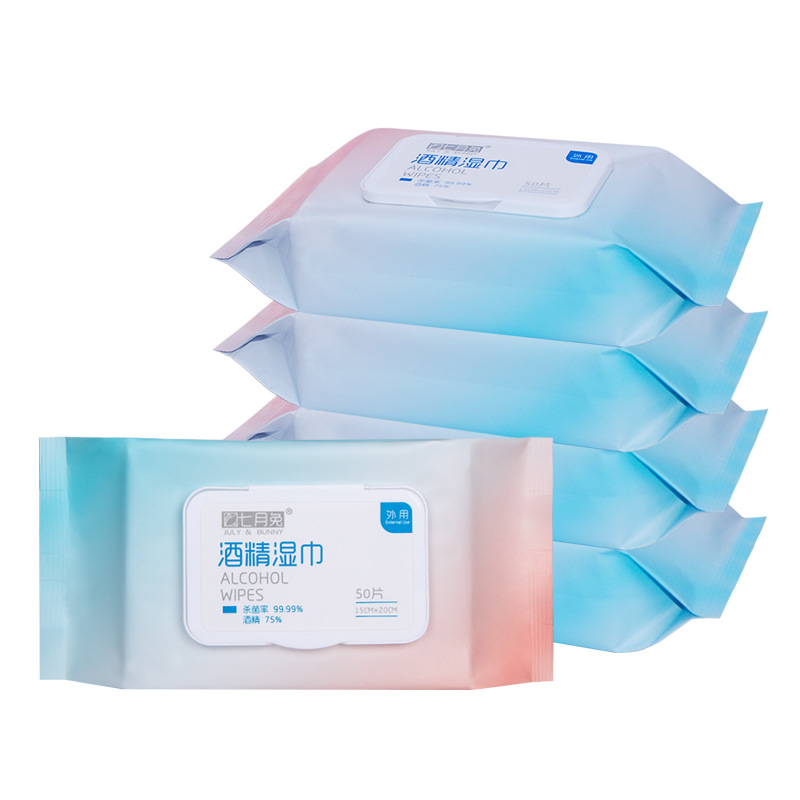
Ethanol wipes are pre-saturated disposable cloths that use ethyl alcohol as the active antimicrobial agent. The mechanism is straightforward: ethanol denatures proteins and dissolves lipid membranes, physically destroying bacteria, enveloped viruses, and fungi in seconds. That is fundamentally different from detergent-based cleaning wipes, which primarily remove soil but do not necessarily kill pathogens.
A single strong fact drives formulation decisions: a 70–75% ethanol solution penetrates microbial cell walls faster than 90% or higher. At 90%, the alcohol coagulates surface proteins into a protective layer that traps the organism underneath, reducing kill efficacy. That is why most medical-grade ethanol wipes you encounter land inside the 70–75% window.
However, not all ethanol wipes are created equal. The base fabric, saturation level, packaging, and additive formula (aloe, glycerin, or benzalkonium chloride) all influence how the wipe performs on skin versus hard surfaces. Before you compare ethanol to isopropyl alcohol, you need to know what a well-designed ethanol wipe should deliver: consistent saturation, low lint, and packaging that prevents evaporation.
When procurement teams ask me to choose between ethanol and isopropyl alcohol wipes, the decision rarely comes down to which alcohol is “stronger.” Both kill a broad range of bacteria and viruses. The real choice depends on what you are cleaning, how quickly you need it to dry, and whether material compatibility or odor matters.
Ethanol is generally perceived as less aggressive on skin and certain plastics, while isopropyl alcohol tends to be slightly more effective against specific non-enveloped viruses but can swell some rubber and acrylics over time. The table below lays out five practical comparison points so you can make a fast, informed call.
| Dimension | Ethanol Wipes | Isopropyl Wipes |
|---|---|---|
| Kill spectrum | Broad: most bacteria, enveloped viruses, fungi; weaker on some non-enveloped viruses | Broad: effective against many non-enveloped viruses (e.g., norovirus surrogates) when concentration is correct |
| Skin tolerance | Generally better tolerated; often used in hand sanitizing wipes with aloe or glycerin | Can be more drying; frequent use may cause irritation |
| Material compatibility | Safe for most metals and high-density plastics; may cloud acrylic or remove some coatings | Can damage acrylic, rubber, and certain painted surfaces; plastic-safe formulas exist |
| Odor | Pungent but fades quickly; many industrial formulations have reduced odor | Sharp, lingering scent; often noted as stronger than ethanol |
| Evaporation rate | Fast; 70% takes longer than 90%, leaving slightly more contact time | Very fast; 70% is standard for disinfection, higher percentages flash off too quickly |
For general hand sanitizing or surface disinfection in offices and homes, ethanol wipes strike a strong balance. In lab settings where a specific non-enveloped virus is the target, you might lean toward isopropyl. And if you need a plastic-safe industrial cleaner, 90% ethanol wipes often win because they evaporate without leaving residue. Household cleaning wipes can serve as a daily option, but for alcohol-based disinfection, formulation and fabric matter more than the cleaner category suggests.
The most persistent myth I hear is that higher alcohol percentage always equals better disinfection. That is wrong in most practical use cases. The sweet spot for rapid microbe kill is 70–75% ethanol because water acts as a catalyst, facilitating penetration of the cell wall. A 90% solution coagulates surface proteins too quickly and evaporates before it can finish the job.
Yet 90% ethanol wipes exist for a reason. In applications where you need lightning-fast drying and absolutely no water residue — like cleaning laboratory instruments or electrical contacts — a high-concentration ethanol wipe is ideal. The table below outlines how to choose based on your real-world scenario.
| Concentration | Contact time for 99.9% kill | Best for | Watch out for |
|---|---|---|---|
| 70% Ethanol | ~30 seconds (bacteria) | Skin antisepsis, general surface disinfection, frequent hand wiping | Slightly slower drying; may leave light water residue on glass |
| 75% Ethanol | ~20–30 seconds | Hand sanitizing wipes, healthcare settings, high-touch surface disinfection | Can still strip natural oils from skin with repeated use |
| 90% Ethanol | Slower (requires longer to fully penetrate due to rapid protein coagulation) | Instrument cleaning, electronics, optics, any surface that must not remain wet | Poor skin tolerance; extremely flammable; not recommended for general hand use |
If you are sourcing disinfecting wipes for a healthcare or public facility, lock in on 70–75% as your baseline specification. Reserve 90% for specialized industrial contracts where rapid evaporation is a hard requirement and the operators are trained on safe handling.
The base material does as much to define wipe performance as the alcohol concentration. A lightweight spunlace nonwoven might be cost-effective, but it can tear on rough surfaces and leave lint behind. A hydroentangled cotton-poly blend offers better strength, while pure cellulose or microfiber provides ultralow linting for optics and electronics.
| Substrate | Linting | Durability | Typical use |
|---|---|---|---|
| Spunlace nonwoven (polyester/viscose) | Low to moderate | Good | General surface disinfection, hand wipes |
| Cotton / bamboo fiber | Very low | Moderate | Skin care, baby-safe surfaces, gentle cleaning |
| Microfiber (PET/PA split fiber) | Extremely low | Excellent | Optics, electronics, stainless steel, glass |
| Airlaid paper / cellulose | Low | Low (may degrade if over-saturated) | Single-use instrument wipes, laboratory tasks |
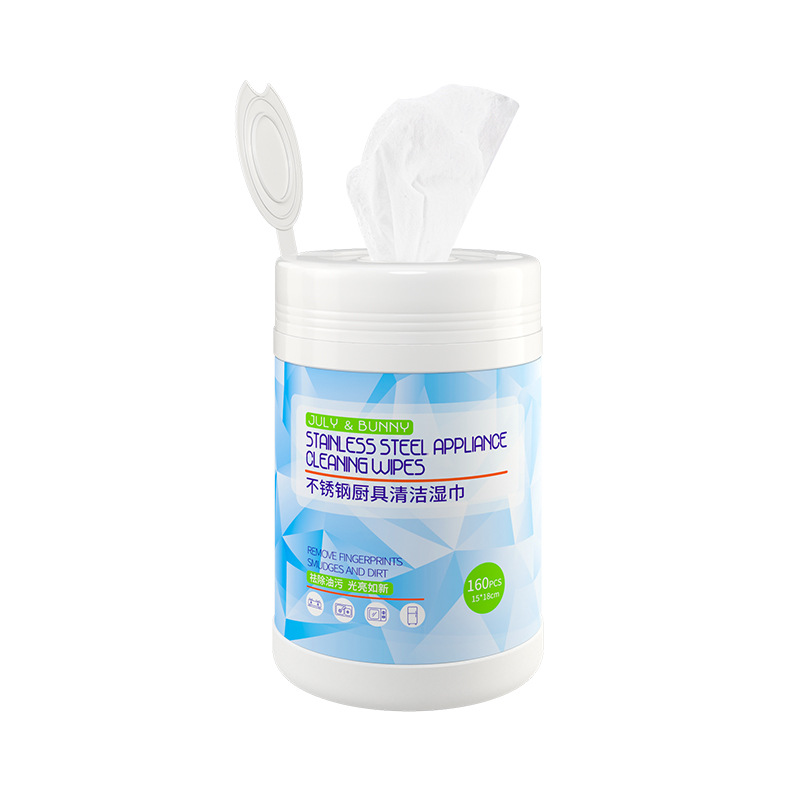
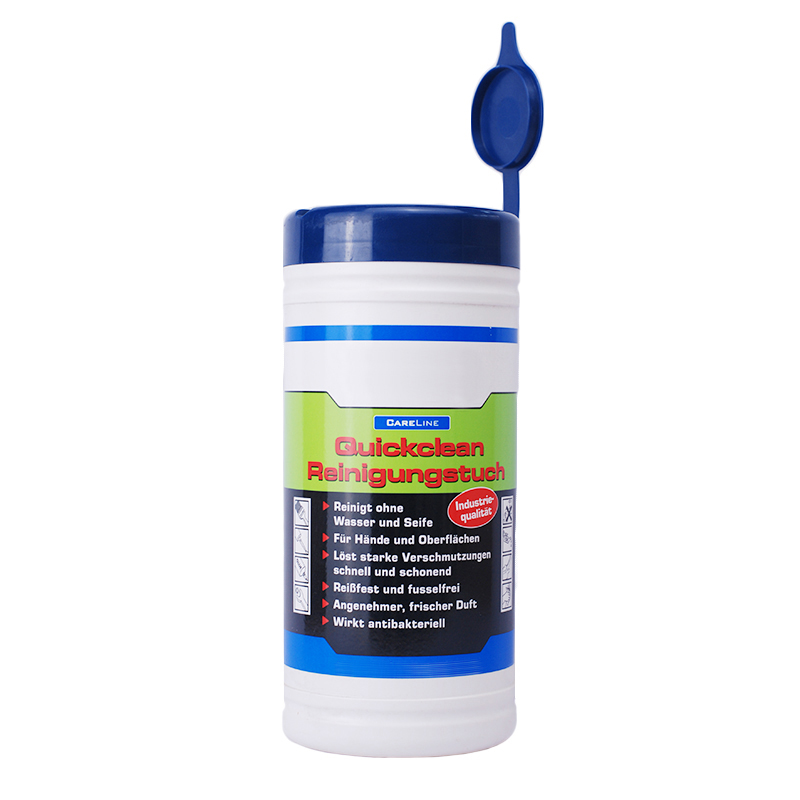
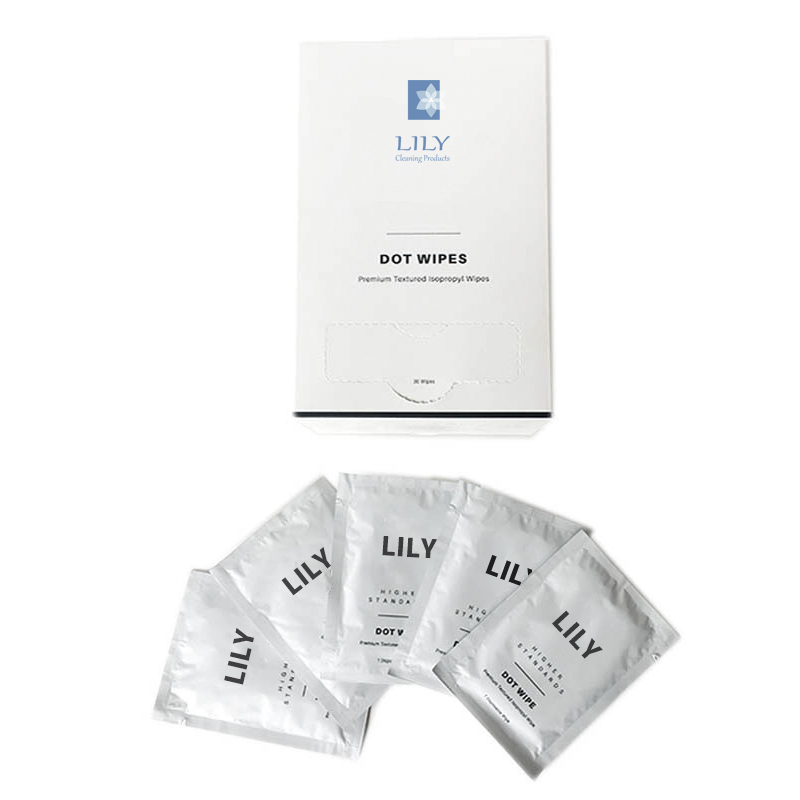
Packaging is equally critical. Ethanol evaporates aggressively. An inadequate closure mechanism turns a bulk bucket into a costly box of dry sheets. For high-frequency use, rigid canisters with airtight seals outperform flow-wrap soft packs. Individually wrapped sachets are unbeatable for portability and sterility but cost more per use.
| Format | Portability | Shelf life | Cost per wipe |
|---|---|---|---|
| Individually wrapped sachet | Excellent | Long (2-3 years typical) | Highest |
| Rigid canister with resealable lid | Fair | Good (if lid is properly closed) | Moderate |
| Soft pack with resealable sticker | Good | Moderate; sticker may lose adhesion | Low to moderate |
| Bulk bucket (roll) with press-on lid | Poor | Moderate; risk of drying if lid is left open | Lowest per wipe for high-volume use |
For an industrial purchase decision, I typically recommend matching the substrate to the surface profile and the packaging to the usage cadence. A busy laboratory might need individually wrapped low-lint wipes, while a janitorial team can efficiently use a bulk bucket with a robust lid.
Not every ethanol wipe fits every job. I have seen facilities waste thousands of dollars by ordering the wrong format or concentration for their actual daily workflow. Here are five high-frequency use cases and what to prioritize in each.
Bulk purchasing ethanol wipes involves more than comparing price per wipe. The most expensive decision you can make is buying wipes that fail a site audit because of missing certifications or inappropriate packaging that leads to premature evaporation. Use the checklist below to eliminate surprises before placing a large order.
If you are sourcing ethanol wipes for niche environments — such as airline catering teams that operate within tight galley space constraints — consider connecting with a specialist who understands the interaction between alcohol concentration, fabric, and packaging in confined spaces. The right partner will walk you through accelerated stability tests and offer pilot batches before full production.
Even a laboratory-grade ethanol wipe fails if end users misuse it. Over years of consulting, I have catalogued the same preventable errors across hospitals, factories, and offices. Avoid these and you keep your infection control protocol intact.
When you build a protocol around these principles, ethanol wipes deliver consistent, auditable results. They become an asset to your infection prevention program, not a random consumable that gets misused or wasted.

Wet Wipes OEM/ODM, Custom Wet Wipes Manufacturers in China. We are making wet wipes enter every household and become an essential part of our daily life, and are making unremitting efforts to create a cleaner and more comfortable home environment.
Read MoreFor exclusive deals and latest offers, sign up by entering your email address below.


 English
 русский
 عربى
عربى