 2026.06.23
 Industry News
Content
Close to three-quarters of all wet wipe performance complaints—tearing during use, poor liquid release, unpleasantly sticky texture—originate in the substrate, not in the formula. The fabric is the skeleton. It determines how much formulation a wipe can carry, how evenly it delivers the liquid, and whether the wipe stays intact under mechanical stress. Liquid formulation can be adjusted. A poorly chosen nonwoven cannot.
Every downstream characteristic depends on the material. Softness is not an additive; it is fiber denier, web layering, and bonding pattern. Wet strength is not a coating; it is fiber type and entanglement. Absorption capacity and release rate are functions of void volume and surface energy. Even preservative efficacy shifts with the substrate: highly absorbent viscose can deplete critical moisture, forcing higher preservative loading. The material defines the product.
When OEM buyers select a wet wipe substrate, they are making a series of cost-performance trade-offs. A material that excels in absorbency often sacrifices strength. A fiber that feels luxurious may have poor heat stability. Understanding these dynamics is the first step toward a product specification that meets both brand promise and manufacturing budget.
Synthetic fiber-based nonwovens dominate the wet wipes market because they offer predictable quality, high production speeds, and price stability. Three fibers form the backbone of most commercial blends: polypropylene (PP), polyester (PET), and viscose (rayon). They are rarely used in isolation. A 70/30 PP/viscose blend is typical for baby wipes. A 50/50 PET/viscose blend often appears in cosmetic or facial wipes. The specific blend ratio precisely tunes absorbency, strength, and cost.
Polypropylene provides the cost baseline. It is lightweight, chemically inert, and retains over 90% of its dry tensile strength when wet. However, pure PP is hydrophobic and feels plastic-like. To compensate, manufacturers blend in viscose, which dramatically boosts absorbency and hand feel. PET brings flexibility and thermal stability, making it useful where the wipe may encounter higher storage temperatures. Viscose, though technically a regenerated cellulosic fiber, is categorized here for its processing synergy with synthetics.
The following comparison captures performance benchmarks for these three fibers in a standard 50 gsm spunlace web.
| Property | Polypropylene (PP) | Polyester (PET) | Viscose |
|---|---|---|---|
| Raw material cost (relative) | Low | Medium | Medium-high |
| Wet tensile strength (% retention) | 90–95% | 85–92% | 45–60% |
| Liquid absorbency (multiple of own weight) | 1–2x | 2–3x | 8–12x |
| Softness (panel score, 1–10) | 3–4 | 5–6 | 8–9 |
| Biodegradability | Not degradable | Not degradable | Moderate (industrial compost) |
Viscose absorbs up to 12 times its weight in water, but wet strength drops by nearly half. This trade-off is why most commercial wet wipes use fiber blends rather than single-component webs. A PP/viscose blend delivers both structural integrity and sufficient liquid capacity for most personal care applications.
Consumer demand for plant-based and plastic-free wipes has pushed natural fibers from niche to mainstream. Cotton, bamboo, and wood pulp (typically in the form of lyocell or Tencel) now account for a growing share of the premium wipe market. These materials convey a cleaner label image and often meet the requirements of OEKO-TEX Standard 100 or FSC certification. Yet their performance profiles differ sharply from synthetic counterparts.
Cotton offers unmatched softness and is inherently hypoallergenic, making it the gold standard for infant and facial wipes. However, 100% cotton spunlace can lose up to 60% of its tensile strength when wet, and it costs three to five times more than polypropylene on a per-ton basis. Bamboo fiber, processed into viscose-grade rayon, blends a sustainable narrative with a silkier hand feel, but its wet strength sits in a similar low-moderate range. Wood pulp fibers, often processed through lyocell technology, provide a unique combination of high wet strength and full biodegradability, though they require careful formula compatibility to avoid fiber swelling.
For OEMs building a premium product line, a blend of cotton and lyocell can hit both the softness and wet strength targets while supporting a plastic-free claim. The exact ratio depends on the required grammage and folding format.
Fiber selection is only half the equation. The bonding technology used to form the nonwoven web directly controls thickness, softness, uniformity, and production economics. Three process families dominate wet wipe manufacturing: hydroentanglement (spunlace), thermal bonding, and chemical bonding.
Spunlace uses high-pressure water jets to mechanically entangle fibers. This method preserves fiber openness and delivers a textile-like drape and softness. It is the preferred route for baby wipes, facial wipes, and any product that touches skin. Thermal bonding relies on calendaring or hot-air fusion to melt thermoplastic fibers (PP or bicomponent PET/PP) and weld the web at contact points. The result is a thinner, stiffer fabric with excellent wet strength but limited absorbency—typical for industrial wipes where softness is secondary. Chemical bonding uses acrylic or latex binders to glue fibers together. It was common in early-generation wipes but has declined due to concerns about binder residues and skin irritation.
| Process | Thickness & Softness | Wet Strength | Typical Speed (m/min) | Best Application |
|---|---|---|---|---|
| Spunlace | High bulk, very soft | Moderate-high (blend dependent) | 80–250 | Baby, personal care, cosmetic wipes |
| Thermal bonding | Thin, stiff | Very high | 200–500 | Industrial, disinfecting wipes |
| Chemical bonding | Medium, variable | Moderate | 100–300 | Older-generation household wipes |
The choice of bonding technology cascades into packaging design. Spunlace webs provide better folding memory and bulk recovery, which is critical for stacked, pop-up dispenser formats. Thermally bonded webs, being thinner, require less packaging volume per wipe but may feel rougher. When the finished wipe will be saturated with high-alcohol formulations, spunlace with a high PET content often outperforms because PET resists alcohol-induced swelling better than PP or viscose.
The same material that makes a premium baby wipe would fail in a heavy-duty degreasing task. Application dictates material specification. A structured decision matrix helps buyers translate use-case requirements into technical parameters.
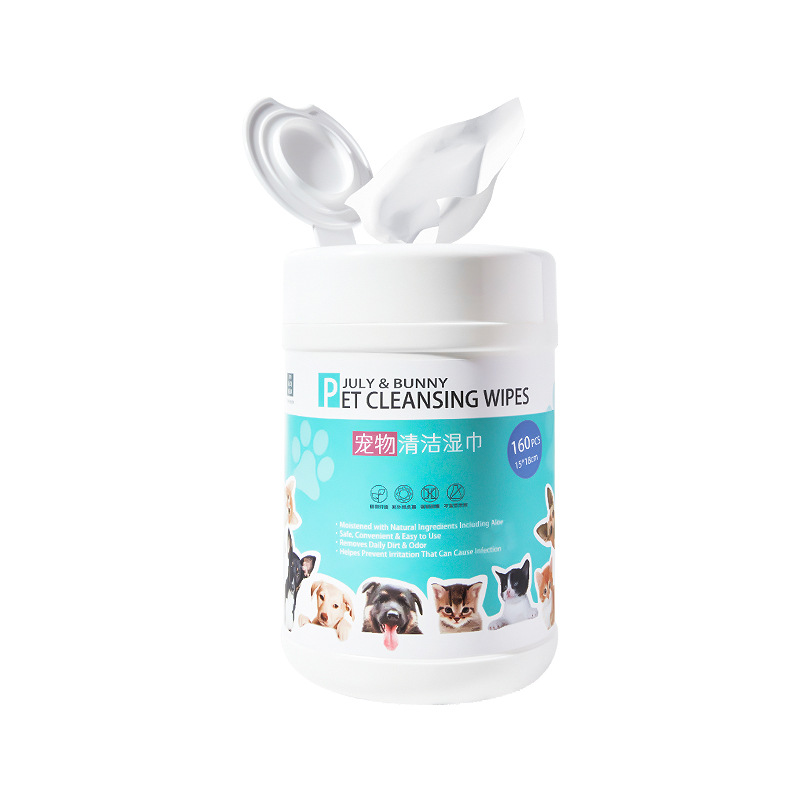
For sensitive skin applications like natural cotton and bamboo baby wipes, softness and allergen-free certification outweigh absolute strength. Industrial cleaning wipes, in contrast, demand high tear resistance and solvent compatibility—even if that means sacrificing hand feel. Industrial cleaning wipes often use reinforced PP or PET blends with grammages reaching 80–100 gsm. Pet care wipes sit between these extremes, requiring a combination of durability and skin-safe formulation; a spunlace viscose/PET blend at around 55–65 gsm is a common starting point for pet wipes.
| Application | Recommended Fiber Blend | Typical GSM Range | Key Performance Drivers |
|---|---|---|---|
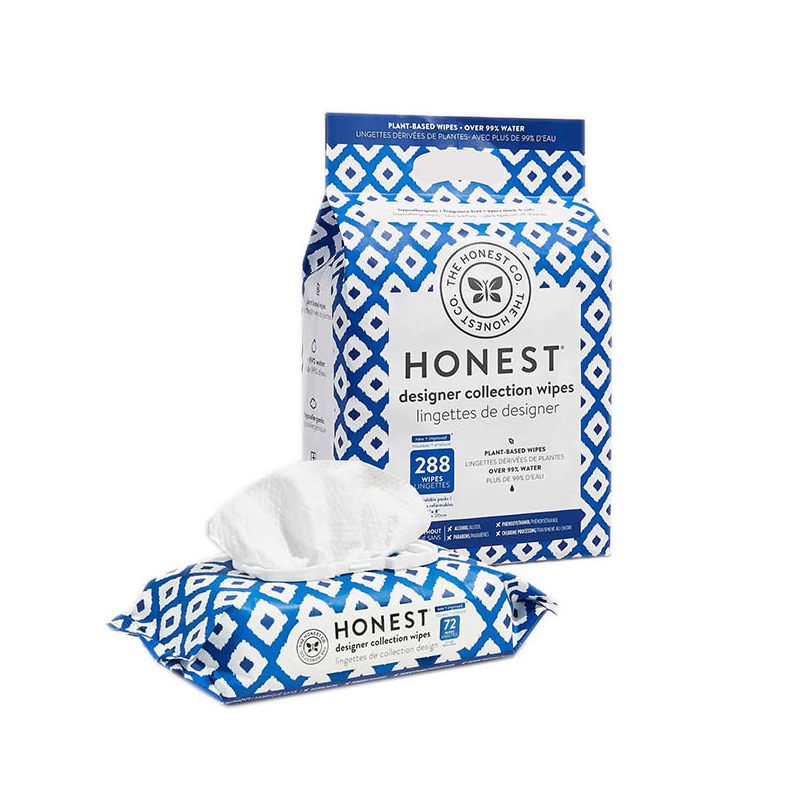
| Baby wipes | 70% PP / 30% viscose, or cotton/lyocell | 40–55 | Softness, lotion compatibility, dermatological safety |
| Facial & makeup removal | 50% PET / 50% viscose | 45–60 | Texture uniformity, oil absorption, no linting |
| Household disinfecting | 80% PP / 20% PET, or 100% PET | 55–70 | Quat/alcohol stability, high wet strength |
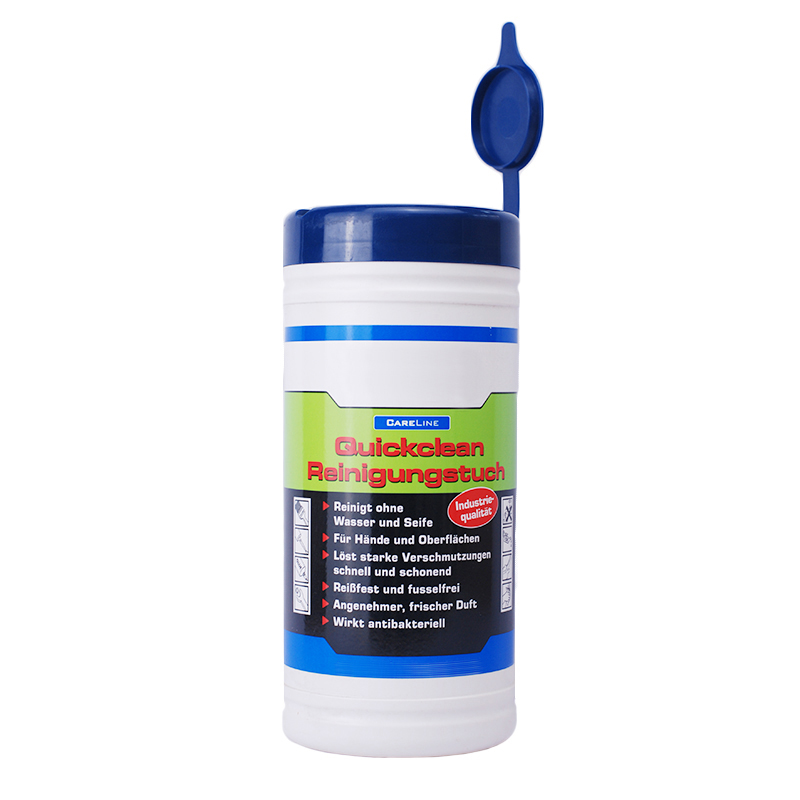
| Industrial degreasing | 100% PET or PP, thermally bonded | 80–100 | Solvent resistance, abrasion tolerance |
| Pet care | Viscose/PET blend, or bamboo-based | 55–65 | Moderate strength, mild formulation compatibility |
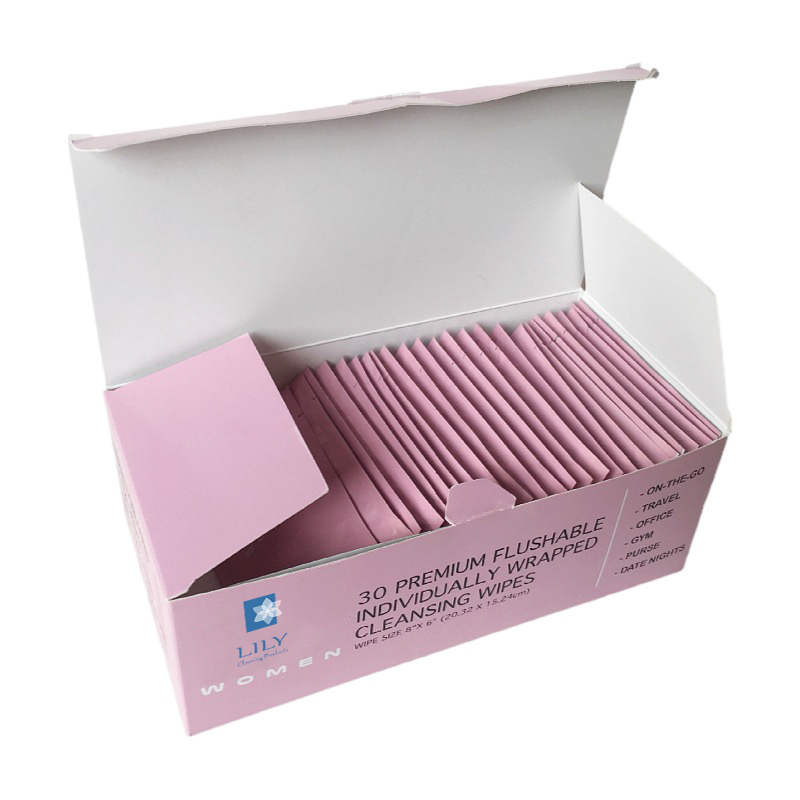
| Flushable wipes | Cellulose/lyocell, no synthetic binders | 50–65 | Rapid dispersibility per INDA/EDANA GD4 |
Grammage deserves particular attention. Moving from 40 gsm to 55 gsm can increase raw material cost by roughly 15–25% but simultaneously boosts absorbent capacity and consumer perception of durability. Lower grammages reduce cost but raise the risk of tearing during dispensing—an expensive complaint if it triggers a retailer return.
Regulatory pressure and retailer mandates are reshaping wet wipe material strategies. The European Single-Use Plastics Directive and similar proposals in the U.S. are pushing manufacturers toward non-plastic, biodegradable substrates. Yet “biodegradable” and “flushable” are not interchangeable, and confusion between them can create technical and reputational risk.
To claim biodegradability, a wipe must meet recognized standards such as OK Biodegradable SOIL or EN 13432. This typically requires avoiding synthetic fibers entirely—100% viscose, lyocell, or bamboo-based constructions. However, pure cellulosic wipes can lose significant strength in the package if preservative systems are not carefully adjusted. For flushability, the industry benchmarks are the INDA/EDANA GD4 guidelines, which require the wipe to pass a series of slosh box and pump disintegration tests. Products that meet these criteria rely on cellulose fibers that rapidly lose entanglement when submerged and agitated, without the need for synthetic binders.
The cost impact is real. Converting a line from a standard PP/viscose blend to a fully biodegradable lyocell-based substrate can increase substrate cost by 30–50%, depending on order volume and regional availability. OEKO-TEX and FSC certifications add further administrative and audit costs but unlock access to premium retail channels that demand documented supply chain responsibility. OEMs and brand owners must decide early whether the sustainability claim justifies the margin compression or whether it can be passed through to the shelf price.
The economics of wet wipe substrate selection are fluid. Polypropylene price indices tracked by Platts and ICIS have shown a spread of roughly $800 to $1,300 per metric ton over the last eighteen months, driven by crude oil volatility and downstream capacity shifts. Cotton prices fluctuate with global weather patterns and inventory levels, ranging between $1,800 and $2,400 per ton in the same period. Bamboo fiber, often sourced from China, carries a narrower premium band but is exposed to logistics disruptions and seasonal harvesting yields.
These raw material movements translate directly into OEM product cost. A 10% swing in PP pricing can alter finished wipe unit cost by roughly 4–6%, depending on grammage and blend. For all-natural substrates, the sensitivity is higher because the fiber represents a larger share of the total bill of materials. Supply chain stability also matters: single-source dependencies on specialty fibers like lyocell can create lead time risk, whereas commodity PP and PET enjoy deep, multi-region supplier bases.
Forward-thinking procurement strategies blend contracted pricing with optional volume windows, and they qualify secondary fiber grades that meet technical specifications without the brand-premium markup. When a product line requires both cost certainty and a sustainability narrative, a hybrid approach—using a certified biodegradable core blend while keeping packaging and logistics plastics minimal—often yields the best total value.

Wet Wipes OEM/ODM, Custom Wet Wipes Manufacturers in China. We are making wet wipes enter every household and become an essential part of our daily life, and are making unremitting efforts to create a cleaner and more comfortable home environment.
Read MoreFor exclusive deals and latest offers, sign up by entering your email address below.


 English
 русский
 عربى
عربى