Material Engineering Behind High-Performance Disposable Floor Towels
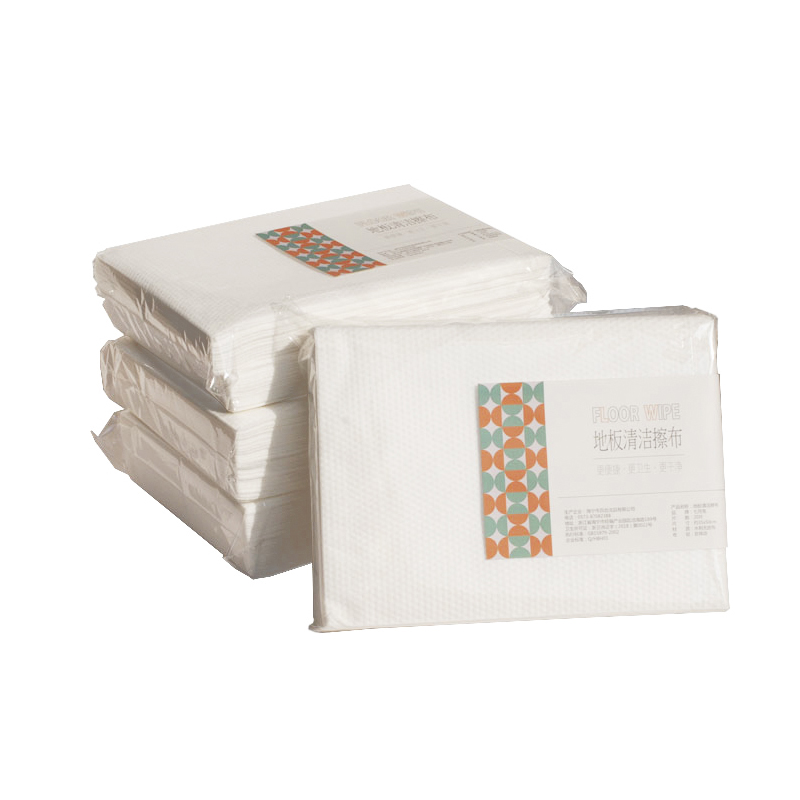
Disposable Floor Towels designed for modern household and commercial cleaning must balance liquid absorption, abrasion resistance, and structural integrity. Unlike lightweight surface wipes, floor-specific substrates often require higher grammage (60–120gsm) to withstand friction against tile, laminate, or vinyl flooring. Spunlace nonwoven and reinforced air-laid composites are commonly selected to provide both tensile strength and effective dirt entrapment.
Fiber blending ratios significantly influence performance. Polyester content improves durability during push-pull mop motion, while viscose or cellulose enhances water absorption capacity. In our 8,000-square-meter production facility in Zhejiang, automated blending systems allow consistent fiber dispersion, ensuring that each batch of Disposable Floor Towels maintains stable mechanical properties even at an average daily output exceeding 600,000 units.
Friction Coefficient and Surface Compatibility
An often-overlooked technical parameter is the dynamic friction coefficient between the towel surface and flooring material. Excess friction increases user fatigue, while insufficient grip reduces cleaning efficiency. Laboratory simulations typically measure friction under wet-load conditions to replicate real usage scenarios. Embossing patterns can be engineered to create micro-channels that trap dust while reducing drag resistance.
- Deep embossing enhances particle capture on textured tiles.
- Smooth surface variants reduce streaking on polished marble.
- Reinforced cross-direction fibers prevent tearing during corner cleaning.
Liquid Formulation Integration and Distribution Control
For pre-moistened Disposable Floor Towels, liquid loading ratio directly impacts cleaning effectiveness. Typical add-on rates range from 250% to 400% of substrate weight depending on disinfectant or detergent concentration. Uniform liquid distribution prevents dry spots that compromise cleaning consistency. Precision dosing pumps and inline weight verification systems are essential in large-scale automated production lines.
Drawing from our experience manufacturing alcohol wipes and multi-functional household cleaning wipes, we apply similar quality control logic to Disposable Floor Towels. Our technical team of more than 10 specialists continuously optimizes saturation balance to avoid pooling inside packaging while maintaining strong surface contact during use. We believe quality first means measurable uniformity in every sheet delivered.
Compatibility with Disinfectant Systems
Different disinfectant chemistries—quaternary ammonium compounds, chlorine-based agents, or alcohol blends—interact differently with nonwoven substrates. Polyester-rich blends demonstrate stronger chemical resistance, while high cellulose content may degrade under strong oxidizing solutions. Compatibility testing typically includes tensile retention evaluation after 24-hour liquid exposure.
| Disinfectant Type |
Substrate Recommendation |
Key Technical Focus |
| Quaternary Ammonium |
Polyester/Viscose Blend |
Liquid retention stability |
| Alcohol-Based |
Spunlace Composite |
Evaporation control |
| Chlorine-Based |
High Polyester Ratio |
Chemical resistance |
Packaging Design for Large-Surface Cleaning Applications
Disposable Floor Towels are typically packaged in bulk flow packs or refill rolls to accommodate high-consumption scenarios. Moisture barrier films with controlled MVTR (Moisture Vapor Transmission Rate) prevent premature drying. Resealable lids must maintain airtight closure after repeated openings to preserve active ingredient concentration.
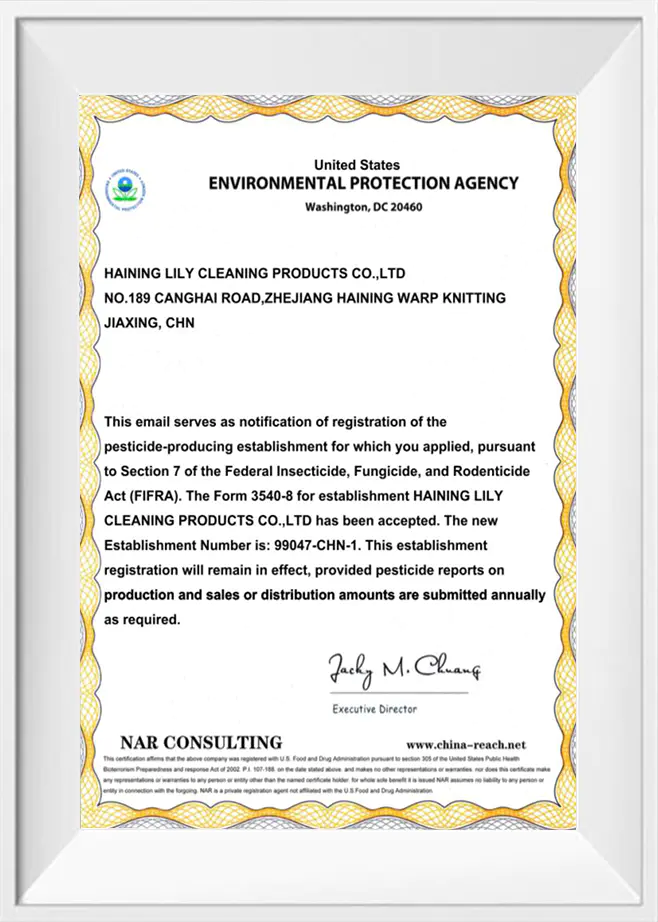
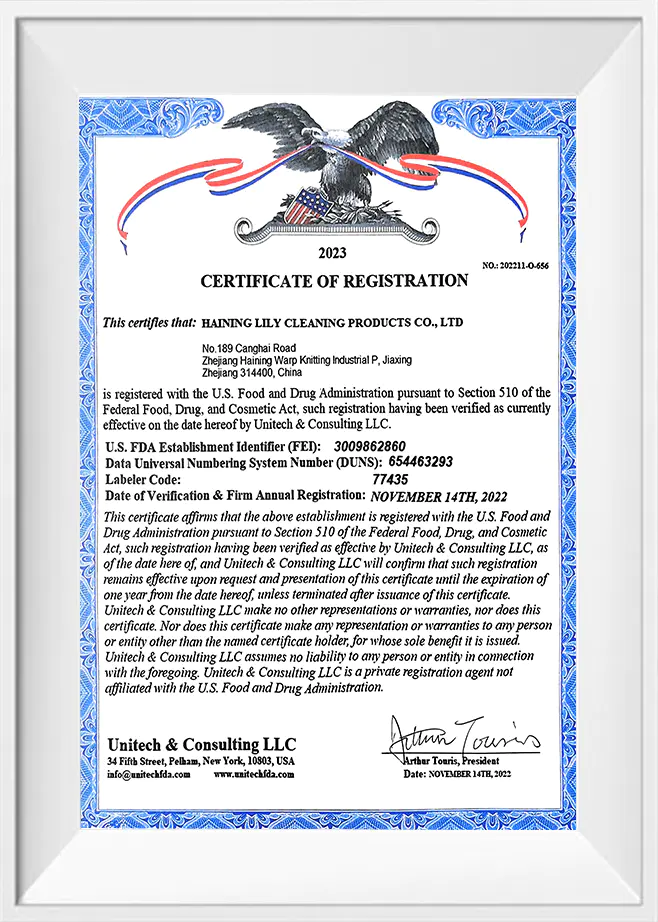
At HAINING LILY CLEANING PRODUCTS CO.,LTD., we support ODM and OEM customization for both single-use industrial packs and household private labeling. Leveraging our advanced automated lines and over 90 skilled employees, we can adjust roll diameter, sheet dimensions, and packaging film thickness to match client distribution channels. Our goal is to make Disposable Floor Towels not only efficient but also logistically practical.
Environmental Load and Disposal Efficiency
As cleaning frequency increases in both residential and public environments, waste management considerations become critical. Biodegradable cellulose-based Disposable Floor Towels decompose more readily under industrial composting conditions, while synthetic blends offer higher durability but require responsible disposal pathways. Material transparency and clear labeling assist distributors in meeting regional environmental guidelines.
With a business philosophy centered on honesty and quality, we continue refining production processes to reduce material waste and optimize cutting efficiency across our 8,000-square-meter factory. Through continuous innovation and responsible manufacturing, we strive to bring practical and high-performance Disposable Floor Towels into everyday life while contributing to a cleaner and more comfortable environment.


 English
 русский
 عربى
عربى