 2026.03.17
 Industry News
Content
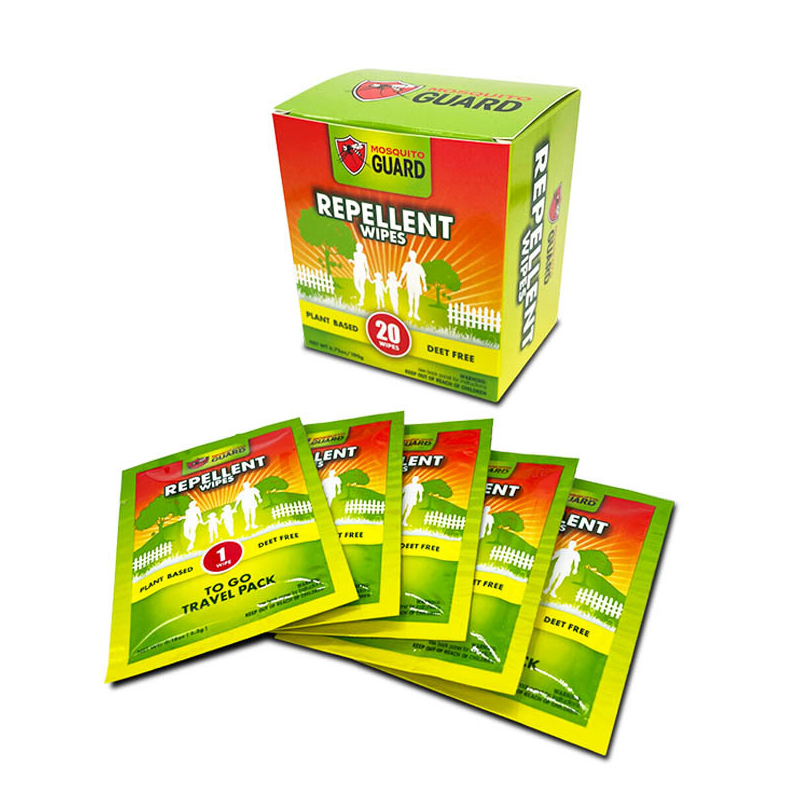
Mosquito repellent wipes work — and for many situations, they work just as well as sprays. Each wipe is pre-saturated with an active repellent ingredient, typically DEET, picaridin, or a plant-based alternative like oil of lemon eucalyptus (OLE). When applied to exposed skin, these compounds interfere with the mosquito's ability to detect the carbon dioxide and lactic acid your body emits, effectively making you invisible to them.
The format is the main advantage: no spray drift, no measuring, and no risk of getting repellent in your eyes or mouth. A single wipe covers both arms and legs for most adults, and the individually sealed packets are TSA-friendly and easy to tuck into a bag or pocket.
Protection time varies significantly depending on which active ingredient is used. Here's a comparison of the most common options found in repellent wipes:
| Active Ingredient | Typical Concentration | Protection Duration | Best For |
|---|---|---|---|
| DEET | 25–30% | Up to 8 hours | High-risk areas, long outdoor days |
| Picaridin | 20% | Up to 8 hours | Sensitive skin, everyday use |
| Oil of Lemon Eucalyptus (OLE) | 30% | Up to 6 hours | Adults preferring plant-based options |
| IR3535 | 20% | Up to 4 hours | Mild conditions, children |
DEET remains the gold standard for efficacy, but picaridin has closed the gap considerably. It offers comparable protection time without the plastic-degrading properties or the oily feel that some people dislike about DEET. Both are EPA-registered and considered safe when used as directed.
Sprays have their place, but there are specific situations where wipes are the smarter choice:
Proper application makes a significant difference in how well any repellent performs. Follow these steps for full coverage:
One common mistake is applying repellent only to a few spots. Mosquitoes will find any uncovered skin, so thorough coverage is essential. One wipe is typically sufficient for an average adult if used efficiently — spread it across the full surface area rather than concentrating it in one spot.
Sweating, swimming, and toweling off all reduce effectiveness faster than the labeled duration suggests. In hot, humid conditions or after water exposure, plan to reapply every 2–3 hours even if the label says 6–8 hours. Carry a few extra packets if you'll be out for a full day.
Age matters here. The CDC and EPA have specific guidance:
For younger children, the wipe format is genuinely safer than a spray — you have direct control over where the product goes. Always apply repellent to your own hands first, then wipe it onto the child, rather than applying directly to their skin from the packet. Avoid their hands, as children frequently put their hands in their mouths.
Not all wipes on the market are equally effective. Here are the key factors to evaluate before buying:
Look for an EPA registration number on the packaging. This confirms the product has been independently tested and the efficacy claims are verified. Without it, protection claims are unsubstantiated.
Higher is not always better. 25–30% DEET or 20% picaridin offers the same protection time as higher concentrations — the difference at 40%+ DEET is negligible for duration but increases skin irritation risk. Match the concentration to your actual exposure level.
Individual foil packets should be hermetically sealed. Low-quality packaging allows the active ingredients to evaporate or the wipe to dry out before use, especially in warm storage conditions like a car glove compartment. Check the expiration date and look for packets that are plump and moist to the touch when pressed.
A good repellent wipe should be large enough to cover both arms without running dry. Some budget options are undersized — roughly 4×6 inches — which may require two packets for adequate adult coverage. Aim for wipes at least 6×8 inches for reliable full-body application.
Repellent wipes are effective, but they aren't a complete solution in every scenario:
Mosquito repellent wipes are a practical, well-tested format that suits a wide range of real-world situations — travel, family outings, outdoor work, and anywhere sprays are inconvenient or inappropriate. Choose an EPA-registered wipe with at least 20% picaridin or 25% DEET, apply it thoroughly to all exposed skin, and reapply every few hours in hot or humid conditions. Used correctly, they offer reliable protection that's on par with any other repellent format.

Wet Wipes OEM/ODM, Custom Wet Wipes Manufacturers in China. We are making wet wipes enter every household and become an essential part of our daily life, and are making unremitting efforts to create a cleaner and more comfortable home environment.
Read MoreFor exclusive deals and latest offers, sign up by entering your email address below.


 English
 русский
 عربى
عربى