 2026.02.28
 Industry News
Content
Disposable airline towels are single-use, pre-moistened or dry cloths distributed to passengers during flights, primarily for refreshing purposes. They are most commonly found on long-haul international routes and in premium cabin classes. Made from non-woven fabric — typically viscose, polyester, or a blend — these towels are designed to be used once and discarded, eliminating the need for onboard laundering.
Airlines have relied on them for decades as a practical, hygienic solution for passenger comfort. While economy class passengers may receive a basic wrapped wet wipe, business and first-class travelers on carriers like Emirates, Singapore Airlines, and Cathay Pacific are often greeted with warm, scented towels — a small but meaningful hospitality gesture at 35,000 feet.
Not all airline towels are the same. The type distributed depends heavily on the cabin class, route length, and airline brand standards.
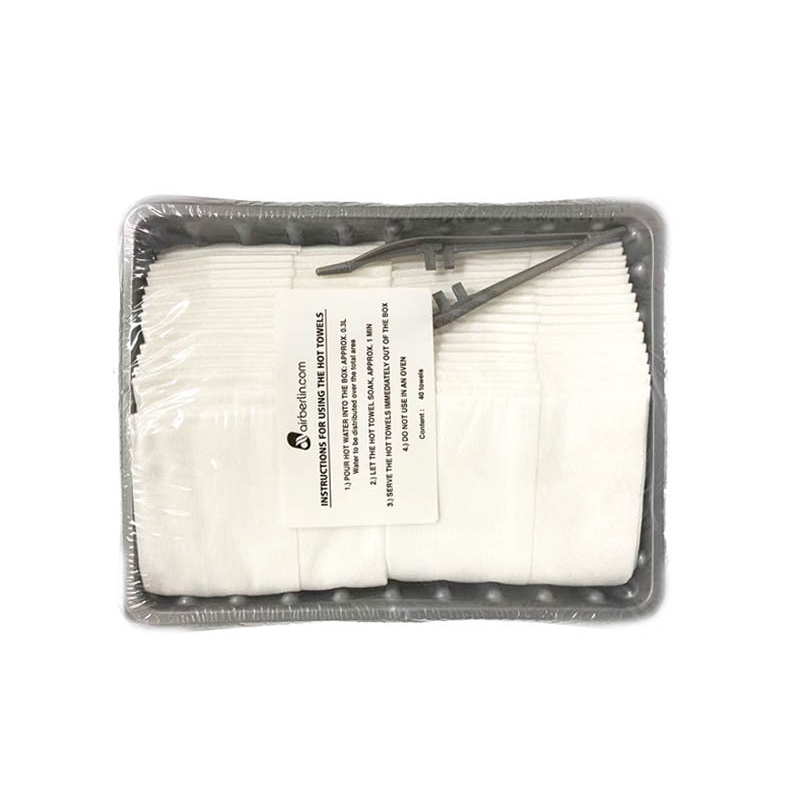
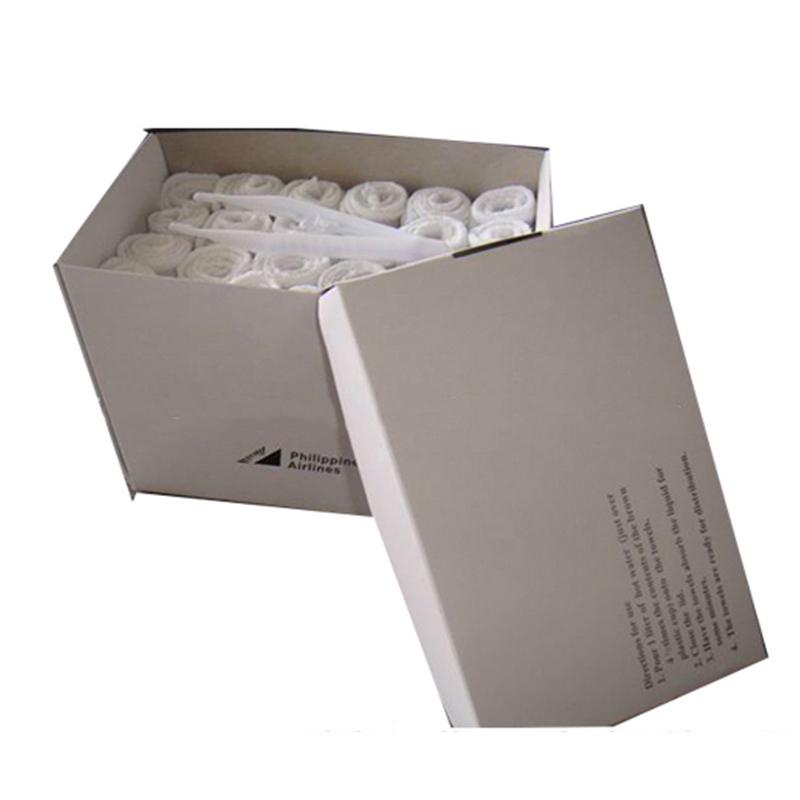
Inspired by the Japanese tradition of oshibori, these are warm, moist towels handed to passengers before meals or after boarding. They are heated in onboard trolleys and served using tongs. Premium airlines often infuse them with light citrus or floral scents. Singapore Airlines and All Nippon Airways (ANA) are well-known for this practice in business and first class.
Popular on flights through hot, humid regions or during summer months, cold towels are chilled before distribution. They provide quick refreshment, particularly appreciated on arrival into tropical destinations.
The most economical option, these individually wrapped moist towelettes are common in economy class and on shorter flights. They typically contain a mild cleanser and are used for hand and face refreshing. Many airlines switched to alcohol-based or antibacterial versions post-COVID-19.
| Type | Cabin Class | Temperature | Common Use |
|---|---|---|---|
| Hot Oshibori Towel | First / Business | Warm | Pre-meal, boarding ritual |
| Cold Refresher Towel | Business / Premium Economy | Cold | Mid-flight refresh, tropical routes |
| Pre-Packaged Wet Wipe | Economy | Ambient | General hand/face cleaning |
The fabric used in most disposable airline towels is non-woven viscose or a viscose-polyester blend, chosen for its softness, absorbency, and low manufacturing cost. Higher-end products used in first class may incorporate a cotton or bamboo-fiber blend, providing a more luxurious feel.
Moistening solutions typically include:
Most towels are individually wrapped in foil or polypropylene packaging to maintain moisture and hygiene until use.
The shift toward disposable towels over reusable linen is driven by several operational and hygiene factors:
Airlines obsess over weight. Every kilogram added to an aircraft increases fuel burn by approximately 0.03–0.05% per flight hour, depending on the aircraft type. Reusable towels require bulk transport, onboard storage, and return logistics — all of which add weight. Disposable towels are lighter, compressed, and require no return trip.
Sealed, single-use products guarantee that each passenger receives an uncontaminated towel. This became a non-negotiable priority following the COVID-19 pandemic, during which many airlines that had scaled back towel service reinstated it — in disposable form — to meet heightened passenger hygiene expectations.
Managing linen at scale is costly. A major hub airline handling hundreds of flights per day would need to collect, transport, launder, inspect, fold, and restock thousands of towels per cycle. Disposables eliminate this supply chain entirely, reducing both labor and facility costs.
Standardized pre-packaged towels ensure every passenger receives the same product regardless of port of origin, reducing quality variation that can occur with outsourced laundry services at different global airports.
Towel service varies considerably by carrier and route. Here is a snapshot of practice across major global airlines:
| Airline | First Class | Business Class | Economy Class |
|---|---|---|---|
| Emirates | Warm scented towel | Warm towel | Wet wipe (long-haul) |
| Singapore Airlines | Warm oshibori towel | Warm towel | Wet wipe |
| Cathay Pacific | Warm towel + extras | Warm towel | Wet wipe |
| Delta Air Lines | Warm towel | Warm towel | Not typically offered |
| Ryanair / EasyJet | N/A | N/A | Not offered |
Low-cost carriers (LCCs) generally do not offer any towel service, as it falls outside their stripped-back service model.
The convenience of disposable airline towels comes with an environmental cost. A single long-haul flight carrying 400 passengers could generate hundreds of individually wrapped single-use items, most of which end up in landfill. The aviation industry produces an estimated 6.7 million tonnes of cabin waste per year globally, according to the International Air Transport Association (IATA), and in-flight disposables are a notable contributor.
Several airlines are exploring greener alternatives:
Japan Airlines and ANA have both taken steps toward more sustainable towel sourcing, opting for towels certified under environmental standards. The challenge remains balancing passenger expectations — particularly in premium cabins where the towel is a signature service moment — against genuine sustainability commitments.
For airline catering suppliers, charter operators, or private aviation companies sourcing disposable towels, key purchasing considerations include:
Major suppliers in this space include Linstol, Buzz Products, and various OEM manufacturers based in China and Southeast Asia, where the bulk of global airline amenity production is concentrated.
Disposable airline towels are a small but telling detail in airline service design. They reflect an airline's balance between hygiene, cost efficiency, passenger experience, and increasingly, environmental responsibility. For premium carriers, the warm towel is a brand statement. For economy travelers, a simple wet wipe is a practical comfort. As sustainability pressure mounts, the industry is slowly moving toward biodegradable materials and smarter distribution — but the disposable towel, in some form, is unlikely to disappear from cabin service anytime soon.

Wet Wipes OEM/ODM, Custom Wet Wipes Manufacturers in China. We are making wet wipes enter every household and become an essential part of our daily life, and are making unremitting efforts to create a cleaner and more comfortable home environment.
Read MoreFor exclusive deals and latest offers, sign up by entering your email address below.


 English
 русский
 عربى
عربى