

 2026.06.29
 Industry News
Content
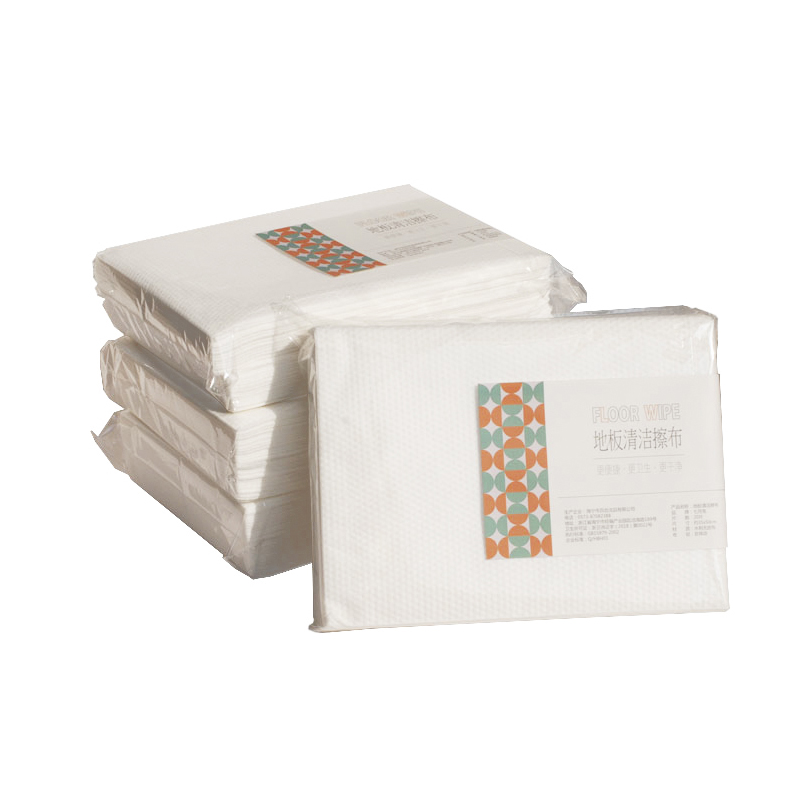
Scrubbing floors with a dirty mop bucket has one inevitable outcome: you're just spreading yesterday's grime around. Traditional mopping recycles soiled water across every square foot, picks up only a fraction of bacteria, and demands a post-clean ritual of rinsing, wringing, and drying. Disposable floor wipes eliminate all three friction points in a single step — you use a fresh, pre-moistened sheet, wipe, and toss.
The immediate hygiene advantage is obvious. Each wipe delivers a precisely dosed cleaning solution onto a surface that has never been used before. There is no cross-contamination from room to room, and you never have to handle a damp, odorous mop head again. For busy households, pet owners, and commercial cleaners, that alone reshapes the daily cleaning routine.
Storage adds another win. A pack of 24 flat wipes takes up less than a third of the space a bucket-and-mop setup requires. Maintenance is zero — no replacing mop heads, no buying separate detergent, no hunting for a dry corner in the utility closet. When convenience is the primary driver, disposable floor wipes deliver a measurable time saving of 30% to 50% on floor cleaning sessions, based on internal workflow studies comparing a 100-square-foot room.
The technology inside modern nonwoven wipes has evolved far beyond damp paper. Many now incorporate textured layers for scrubbing grout, thicker cores to retain moisture longer, and pH-neutral formulas that won't dull sealed hardwood. If you've ever second-guessed what cleaner to use on your expensive engineered floors, disposable wipes take the guesswork out of the equation — and they're always ready under the sink.
Most cost debates between wipes and a mop stop at the price tag of a refill pack. That's a narrow lens. The real comparison has to factor in water, detergent, mop head replacements, and labor time — especially for commercial settings where paid staff clock every minute. The table below shows a typical residential scenario cleaning a 1,000-square-foot hard surface area twice a week.
| Item | Disposable Wipes (24-pack, 2 uses/week) | Traditional Mop + Detergent |
|---|---|---|
| Consumables per use | $1.20 – $1.80 | $0.15 (detergent fraction) + water negligible |
| Mop head replacement (monthly amortized) | $0.00 | $3.00 – $5.00 |
| Total monthly consumable cost | $11.52 – $17.28 | $4.20 – $6.40 |
| Average cleaning time (100 sq ft) | 4–6 minutes | 8–12 minutes (including wringing, bucket changes) |
| Monthly labor (if valued at $15/hr) | $8.00 – $12.00 | $16.00 – $24.00 |
| Hygiene score (fresh solution per swipe) | High — no reused water | Low — dirt spreads as water grays |
The upfront consumable cost of wipes is higher, but once you assign a dollar value to time, the gap narrows quickly. For a family with young children or pets, those 15 extra minutes per session add up to over 22 hours a year — time you could reclaim. In commercial cleaning, where labor makes up 70%–80% of total cost, floor wipes often flip the equation entirely, delivering a positive ROI by reducing staff minutes without sacrificing cleanliness.
One often-overlooked factor is water usage. A single traditional mopping session can use 2–3 gallons of water, not counting the rinse buckets. Over a year, that's 200–300 gallons per household simply for floor cleaning. Disposable wipes require zero additional water on site, which has a small but real sustainability angle, especially in drought-prone regions.
Not every floor reacts the same way to moisture and chemistry. Using the wrong wipe can leave a sticky film on laminate, micro-scratches on hardwood, or a dangerously slick surface on polished tile. The decision starts with pH, abrasive texture, and dry time. The table below maps four common flooring categories to the ideal wipe profile.
| Floor Type | pH Preference | Abrasive Sensitivity | Recommended Wipe Material & Formula |
|---|---|---|---|
| Sealed hardwood | Neutral (6.5–7.5) | Low — avoid textured scrubbing layers | Non-woven soft wipes with no-wax, quick-dry formula |
| Laminate | Slightly acidic (5.5–6.5) to prevent swelling | Low to moderate | Lightly damp wipes, no excess liquid; low-residue surfactant |
| Ceramic / porcelain tile | Alkaline (8–9) tolerated for grime | High — can use micro-scrub surfaces | Thicker wipes with textured ridges; heavier-duty degreasing agents |
| Natural stone (marble, travertine) | Neutral only — acid etches the surface | Low — no coarse fibers | pH-neutral, solvent-free wipes; often alcohol-free to preserve sealant |
For decades, wood floor owners were warned against any wet cleaning. Modern sealed hardwood finishes have changed that, but the danger is still real if the wipe leaves standing moisture for more than two minutes. Look for wipes labeled “streak-free” and “quick-drying.” If your floor has micro-bevels or open seams, a thinner sheet that doesn't drip is safer; thicker wipes may hold too much solution and puddle between planks.
Tile surfaces, especially around kitchens and entryways, demand more muscle. A wipe with a built-in scrubbing pattern and an alkaline cleaner can dissolve grease without a separate pass. If you're managing a hotel lobby or restaurant floor, you need a durable sheet that won't tear on grout lines — and that's where our industrial-grade disposable floor towels with reinforced nonwoven fabric become indispensable.
While brand names dominate store shelves, the performance difference between wipes comes down to three measurable specifications: sheet dimensions, material composition, and moisture longevity. A 24-inch by 14-inch sheet covers 40% more surface area per pass than a standard 18-inch pad, which translates directly to fewer bend-downs and refills — a significant metric for anyone cleaning an entire floor plan.
Material choice splits into two camps: plant-based and synthetic blends. Plant-based wipes (often viscose or lyocell from wood pulp) biodegrade faster and feel softer, but they may lose tensile strength when saturated for more than 45 days. Polypropylene/polyethylene nonwovens resist tearing even on rough tile and hold a wet feel longer, which makes them the default for large commercial jobs. A hybrid construction — a plant-based top layer fused to a thin synthetic backing — is gaining traction because it balances eco-appeal with durability. For households cleaning delicate surfaces, our household cleaning wipes use a carefully calibrated moisture level to avoid over-saturation.
Moisture retention is the quiet spec that determines whether a wipe can clean a 200-square-foot room without drying out halfway. Quality manufacturers quote a “wet-out percentage” — the ratio of liquid to dry fabric weight. For disposable floor wipes, a range of 250%–350% delivers a wet pass for about six to eight minutes of open-air use before evaporation sets in. Anything below 200% will feel dry before you finish the kitchen.
Compatibility with mop systems also deserves attention. Not all wipes fit every clamp or Velcro head. A universal design with deep pockets and elastic gathering works across most consumer mops, but if your facility uses a specific commercial flat-mop system, check pocket depth and attachment style. Custom sizing is where direct sourcing from a manufacturer removes the guesswork; we regularly produce sheets cut to exact client specifications with branded packaging.
The word “disposable” creates an instant tension with sustainability. But the environmental story isn't one-dimensional — the wipe's material, packaging, and end-of-life pathway all matter. A 2024 independent lifecycle analysis of home cleaning methods found that switching from a cotton mop (with hot-water machine washing) to plant-based disposable wipes could reduce carbon footprint by 12% per year, mainly due to eliminating the energy-intensive hot wash cycle.
Plant-based nonwovens made from lyocell or PLA (polylactic acid from corn starch) are technically biodegradable under industrial composting conditions. They'll break down in 12–24 weeks in a commercial facility with the right heat and microbial activity. However, placing a floor wipe in a backyard compost pile rarely works — it lacks the necessary temperature and may not fully degrade. The more practical move is to look for certifications like OK Compost HOME or TÜV Austria's biodegradability seal, which confirm the material can break down in ambient conditions without leaving microplastics.
Packaging waste still lags. Most bulk packs come in multi-layer plastic pouches or rigid tubs, often non-recyclable in curbside programs. Forward-thinking suppliers are shifting to mono-material recyclable films and smaller headspace cartons. For business buyers, ordering in large-format shrink-wrapped rolls can cut packaging grams per wipe by over 40% compared to individual packet packs. Requesting that your contract manufacturer ship in recyclable corrugate pallets instead of shrink-wrapped bundles is a conversation opener that serious facility managers are already having.
If biodegradability is a dealbreaker for your company's ESG goals, ask suppliers for a technical data sheet showing the wipe's disintegration rate according to ISO 14855 or ASTM D6400. A credible answer includes a lab report number, not just a marketing claim. Our OEM team regularly formulates with lyocell and bamboo blends for clients who need verified compostable floor cleaning solutions.
Hotels, office buildings, and janitorial services face a different math than homeowners: they calculate cost per room cleaned, not per pack. Bulk orders of disposable floor wipes often start at 10,000 sheets per SKU, and small differences in sheet size or moisture load can swing annual procurement spend by 15%–25%. The first decision point is size standardization. A universal 24″ x 14″ sheet will work for most flat mops, but if your staff use a proprietary system, custom cutting is non-negotiable — and it rarely costs extra at volumes above 50,000 sheets.
Next, scrutinize the formulation. A wipe that cleans a hotel lobby's polished granite may leave streaks on the elevator's matte tile if the surfactant package doesn't match both surfaces. This is where private-label manufacturing shines. You can specify a dual-purpose formula, a signature scent (or fragrance-free for allergy-sensitive environments), and even embed your logo on the pouch without any tooling charge on the first order.
Pricing follows a predictable staircase. Expect per-sheet costs to drop by 18%–25% when moving from 5,000 to 50,000 sheets, and another 10%–12% when crossing 200,000 sheets. Smart buyers also negotiate on packaging density: a 200-sheet roll pack that stacks flatter uses less warehouse space than 40 individual five-packs, which slashes fulfillment costs. If you're restocking every 45 days, order a quantity that allows a 90-day buffer to avoid rush fees and take advantage of sea freight lead times.
Finally, verify production lead time and quality certifications upfront. A supplier who can show an ISO 9001 quality management certification and a consistent 25-day lead time for repeat orders gives you supply chain stability. Request a sealed sample run of 100 sheets before committing; test for dry-out time in your facility's specific humidity, tear resistance on your actual floor texture, and end-user satisfaction among the cleaning crew. Real purchases start with real samples, not spec sheets.

Wet Wipes OEM/ODM, Custom Wet Wipes Manufacturers in China. We are making wet wipes enter every household and become an essential part of our daily life, and are making unremitting efforts to create a cleaner and more comfortable home environment.
Read MoreFor exclusive deals and latest offers, sign up by entering your email address below.


 English
 русский
 عربى
عربى