

 2026.11.14
 Industry News
Content
Ask a gynecologist what makes a feminine wipe worth buying, and you rarely get a brand name back. You get a short list instead: a pH close to the body's own, no fragrance, no alcohol, a soft carrier material, and a firm reminder that the product belongs on external skin only. That list matters far more than any phrase printed on the front of the pack.
We have been manufacturing wet wipes since 2003, including pH-balanced intimate hygiene wipes and gentle wet toilet paper, so we spend a lot of time reading ingredient decks and listening to what brand owners hear from their customers. What follows is the clinical guidance translated into something you can use in a store aisle, or in a product brief of your own.
The phrase itself is not regulated, so it is worth understanding the reasoning behind it rather than the wording. Clinicians who discuss intimate wipes tend to start from one principle: the vulvar skin barrier and its natural flora are easy to disturb and slow to recover. Anything that strips lipids, shifts acidity, or leaves a fragrance residue is working against that barrier.
In practice, the advice converges on four requirements rather than a single hero ingredient:
Botanical extras such as aloe, chamomile or plant essences sit in the comfort column. They can make a wipe feel pleasant, but they are rarely the deciding factor in whether a product is suitable for sensitive skin.
If you only have a minute in a shop, this is the part worth memorising. It also happens to be the table our ownformulation team uses when a client asks what a "clinically sensible" intimate wipe should contain.
| Label element | Why it matters | Warning sign |
|---|---|---|
| pH buffer (lactic or citric acid) with a stated value | Matches vulvar acidity and is less likely to disturb the natural flora | "pH balanced" claimed with no number disclosed anywhere |
| Purified water as the first ingredient | Carries the formula without leaving a sticky or soapy residue | Alcohol (ethanol or isopropyl) high in the list |
| Mild non-ionic surfactants | Lift residue gently without stripping the skin's lipids | SLS, high-foam soap systems, strong cleansing bases |
| Low-level, well-chosen preservative system | Keeps a genuinely wet product microbiologically safe for its shelf life | "Preservative-free" claimed on a wet wipe without explanation |
| Soft carrier: cotton, viscose, lyocell or bamboo | Reduces friction on sensitive or post-partum skin | Stiff, very low-GSM nonwoven that sheds lint |
| Fragrance-free declaration | Fragrance is one of the most common contact irritants | Parfum, essential oil blends, "fresh scent" positioning |
One caveat is worth repeating: a preservative is not a flaw. A wet wipe that contains water is a microbial environment, and a properly preserved product is safer than an unpreserved one. The question is which preservative, at what level, and whether the manufacturer has tested it.
Healthy vulvar skin sits at around pH 3.8 to 4.5, kept there partly by lactic acid produced by the resident flora. A wipe that lands well outside that window, even briefly, can leave skin feeling tight or itchy within hours. This is why formulators buffer with lactic or citric acid rather than simply adding water and aloe.
It is also why a number on the pack is more useful than an adjective. A product that states 4.0 tells you the formulator measured something. A product that says "pH balanced" and nothing else tells you very little. We go further into the physiology and the formulation trade-offs in our guide to vaginal pH wipes and how to read their labels.
The two categories get lumped together online, but they behave differently. Wet toilet paper is a larger, softer sheet designed for the bathroom, meant to be used at the toilet and disposed of carefully. Intimate hygiene wipes are smaller, more heavily buffered, often carry lactic acid, and are built for freshening outside the bathroom: after exercise, during travel, after intimacy.
A well-made intimate wipe keeps the sheet small, the formula short, and the pack resealable so the product does not dry out between uses. Ours are built around a pH-balanced formula with no fragrance and no alcohol, tested on sensitive skin types rather than only on healthy volunteers.
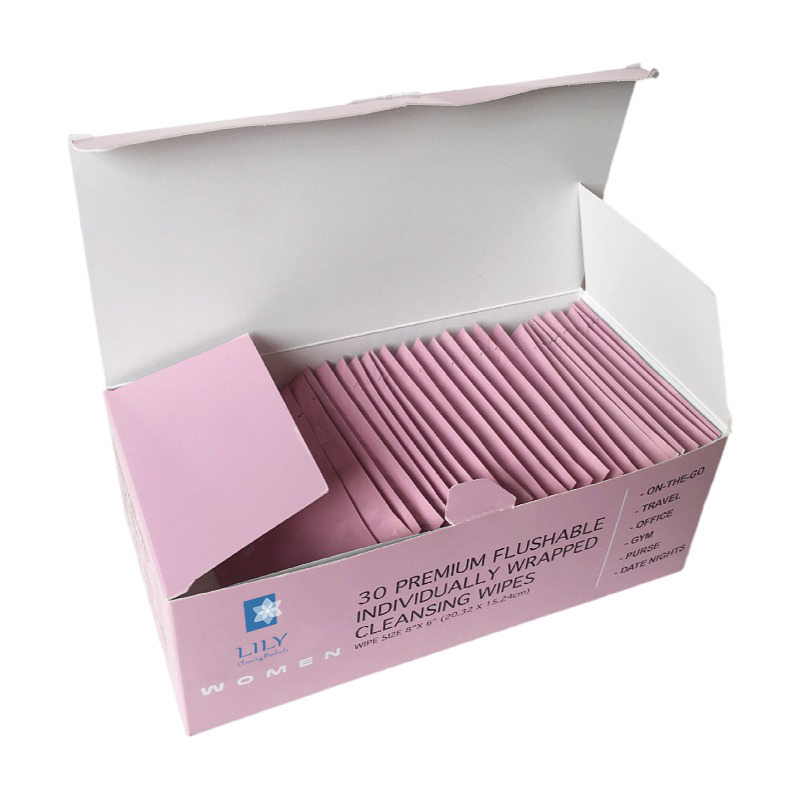 pH-Balanced Intimate Hygiene Wet Wipes for Sensitive SkinpH-balanced intimate wipes with lactic acid and plant extracts, formulated without soap, alcohol, or parabens for sensitive daily cleansing and private-label options.View Product →
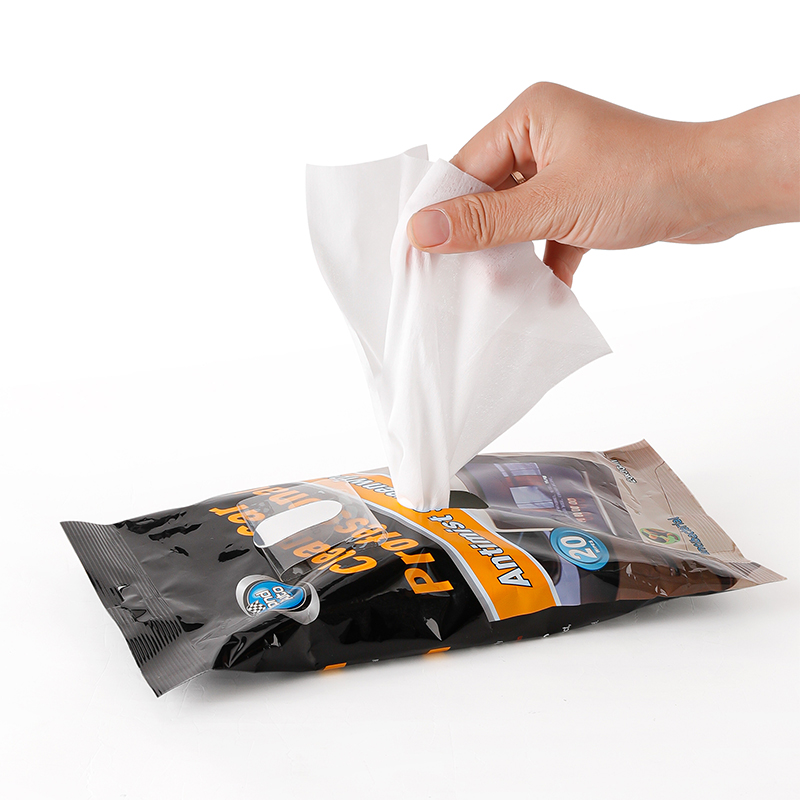
Wet toilet paper solves a different problem. It is the everyday bathroom product, softer than dry paper, and much gentler for anyone dealing with irritation, post-partum recovery or haemorrhoids. A gentle universal formula without fragrance is the sensible default for a household pack.
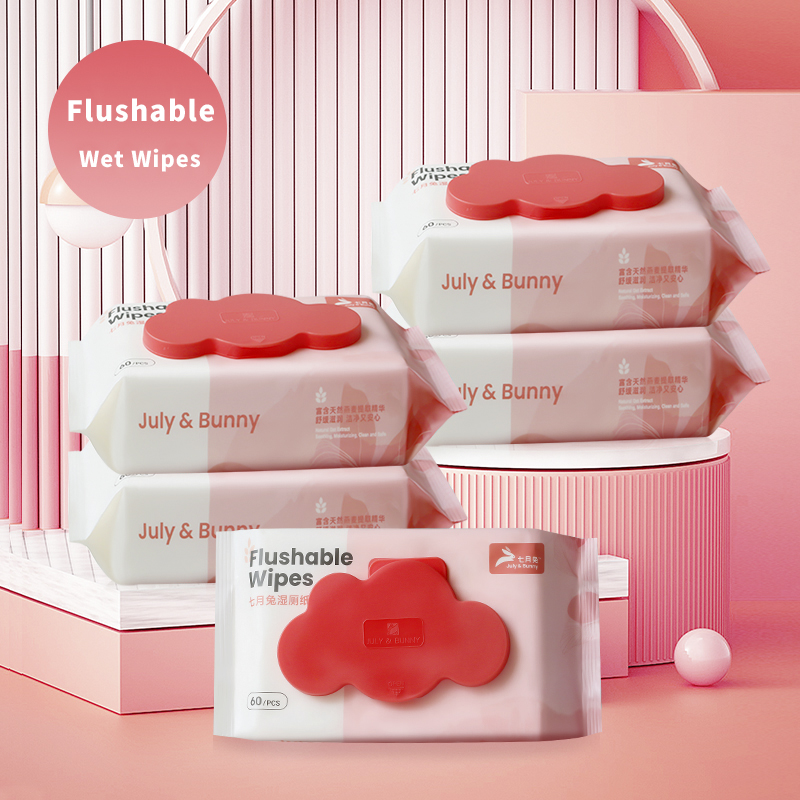 Flushable Gentle Universal Wet Toilet PaperSoft, water-based flushable wet toilet paper with a 99% pure water formula, alcohol-free and fluorescent-free, suited to daily bathroom cleansing and family use.View Product →
If you are buying for a household or building a retail range, stocking both makes sense. They are used in different rooms at different moments, and one does not replace the other.
Technique is not a detail. Most irritation reports we hear about trace back to frequency or direction rather than to a single ingredient.
Wipes are a convenience, not a replacement for plain water and a gentle wash. On ordinary days, water alone is enough for most people.
There are moments when a wipe is the wrong tool. If you have unusual discharge, persistent itching, a burning sensation, or an odour that has changed, covering it with a fragranced or even a fragrance-free wipe can mask a symptom that deserves a proper look. The same applies during treatment for a vaginal infection, in the weeks after gynaecological surgery, and for anyone managing lichen sclerosus, eczema or psoriasis in the area.
Post-partum is another period to be careful. Skin is often more sensitive than usual, and a soft, unfragranced product used sparingly is a different proposition from a daily routine. When in doubt, ask your clinician before adding a new product to the routine.
For brand owners and buyers, the checklist above becomes a specification. In our experience, four items separate a formula that holds up from one that only looks good on paper: a measured pH target with batch testing rather than a one-off reading, a preservative efficacy test that reflects real use conditions, stability data across the full shelf life, and a carrier material whose weight and texture are actually specified.
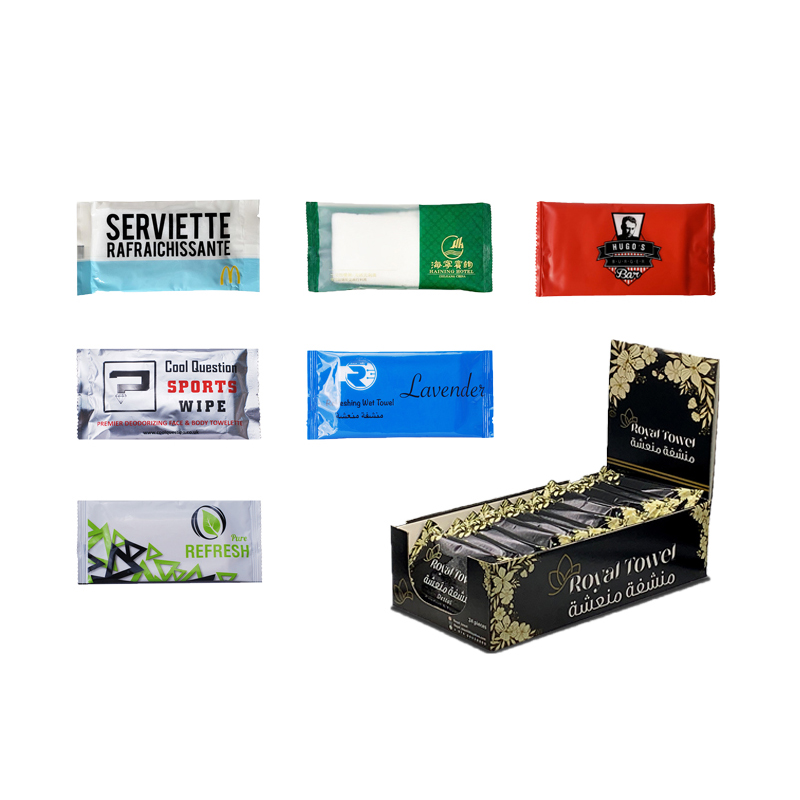
Packaging matters more than it seems. Individually wrapped sachets suit travel and hospitality; resealable 10s and 80s suit retail; larger flow packs suit households using wet toilet paper daily. Flushability claims need evidence behind them, and labelling has to be honest about external use. You can see how our plant in Haining is set up, and what we can customise, on our about page.
The honest answer to "which feminine wipe do doctors recommend" is that clinicians recommend a set of properties rather than a product. Match those properties, use the product sparingly, and most of the guesswork disappears.
That is the standard we hold our own intimate wipes to, and it is the conversation we are happy to have with any brand building a product in this category.

Wet Wipes OEM/ODM, Custom Wet Wipes Manufacturers in China. We are making wet wipes enter every household and become an essential part of our daily life, and are making unremitting efforts to create a cleaner and more comfortable home environment.
Read MoreFor exclusive deals and latest offers, sign up by entering your email address below.


 English
 русский
 عربى