

 2026.11.05
 Industry News
Content
Few purchases get second-guessed as much as baby wipes. They touch a newborn's skin dozens of times a day, they are bought by the case, and the label usually answers one question while raising three more. Parents want something gentle enough for reactive skin, and they want a product that does not leave a trail of plastic behind. In 2026, those two demands are finally being met by the same pack more often than not.
We have been manufacturing wet wipes in Haining, Zhejiang since 2003, and a large share of that work is baby wipes made under other people's brand names. What follows is the advice we would give a friend who asked for help reading the shelf.
Three separate decisions sit behind that one word. The substrate is the cloth itself, the nonwoven that carries the liquid. The formula is the lotion: water, pH adjusters, preservatives and any soothing ingredients. The packaging is the pouch, the lid and the outer wrap. A wipe can be excellent on one of those and disappointing on the other two, and the front of the pack rarely tells you which.
Words like biodegradable, compostable and flushable are not interchangeable. Compostable usually refers to industrial conditions that a home garden cannot reproduce. Biodegradable simply means the material will eventually break down, with no promise attached about how long that takes. Flushable is the claim to treat most carefully: even wipes that pass a flushability test can burden older plumbing, so the bin remains the safer habit.
Plant-based deserves a second look too. Bamboo grows quickly and makes a soft, absorbent wipe, but the fiber used in most bamboo wipes is regenerated cellulose rather than raw bamboo. That does not make it a poor choice. It does mean the technical data sheet matters more than the leaf printed on the pack.
Reactive skin is less about "natural" and more about "few". Short ingredient lists, clean water and nothing added purely for the sake of a nicer smell tend to do better than long botanical blends. Purified or deionized water at around 99% of the formula leaves very little room for irritants.
Fragrance is the most frequent culprit, and "unscented" is not a guarantee that no masking fragrance was added. Worth scanning for on the back label: essential oils such as citrus or lavender, drying alcohols, methylisothiazolinone and similar preservatives, and plant extracts that sound soothing but behave as allergens for some babies.
Preservatives deserve a fair hearing rather than automatic suspicion. A preservative-free wipe is a genuine option for newborns, but it depends on tighter production controls and packaging that keeps microbes out. That trade-off is the manufacturer's job to manage, not something to wave away. Whichever route you choose, test a new wipe on a small patch of skin before using it all over, and stop if redness persists.
Substrate choice drives how a wipe feels, what it costs, and what happens to it after the nappy change. These are the four materials buyers ask us about most often.
| Material | Feel and Strength | End of Life | Good Fit For |
|---|---|---|---|
| Spunlace cotton | Very soft, low lint, moderate wet strength | Readily biodegradable | Newborn and nappy-area use |
| Bamboo fiber nonwoven | Soft, highly absorbent, slightly heavier hand-feel | Plant-based; degradability depends on processing | Everyday eco-positioned ranges |
| Viscose and PP blend | Strong and durable, suits larger wipe formats | Slower to break down; contains synthetic fiber | Value packs and bulk sizes |
| Airlaid wood pulp | Thick and cushioned, lower wet strength | Highly biodegradable | Dry or lightly dampened wipes |
Whether you are stocking a nursery or sourcing for a retail brand, the same six questions separate a good purchase from an expensive lesson.
If a plant-based substrate paired with a deliberately short formula is what you are after, our natural cotton and biodegradable bamboo fiber wipes for sensitive skin are a sensible place to start.
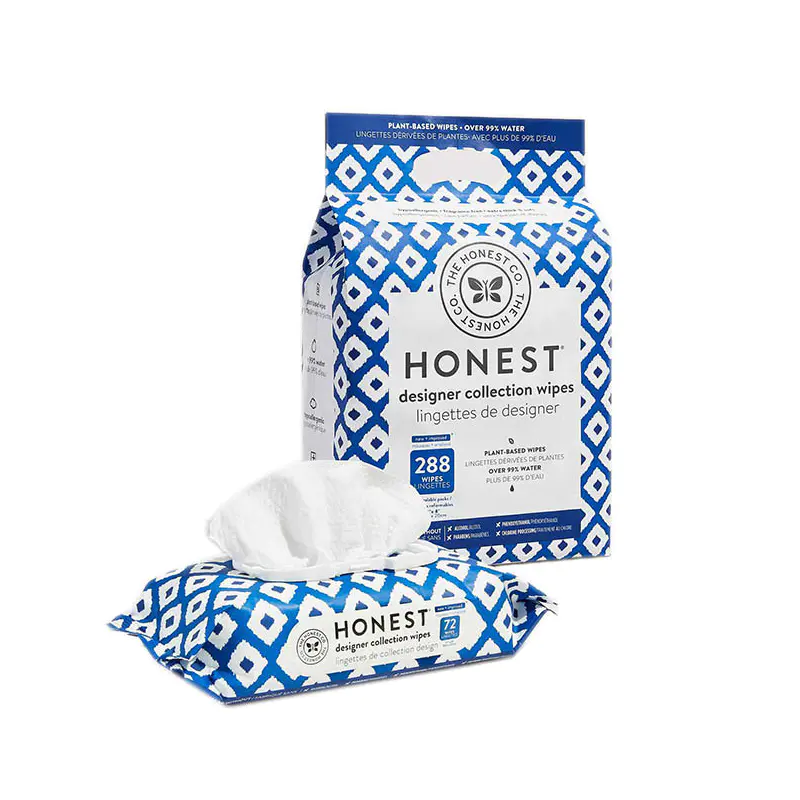 Natural Cotton and Bamboo Baby Wipes for Sensitive SkinPlant-based cotton and biodegradable bamboo wipes with a fragrance-free, minimalist formula for sensitive skin, suited to wholesale private-label programs.View Product →
Two shifts stand out from the enquiries we handle. First, plastic-free substrates have moved from novelty to expectation, particularly in Europe and Australia, where retailers now ask for substrate declarations alongside price. Second, packaging is catching up: refill pouches, paper-based wraps and recyclable mono-material films are being requested by buyers who happily accepted laminated foil two years ago.
Formulas are trending the same way, with fewer ingredients, higher water percentages and preservative systems chosen for tolerance rather than cost. Labelling rules around flushability are also tightening in several markets, which is healthy for everyone involved. If you would like a longer walkthrough of how these criteria interact in practice, our selection criteria guide covers the detail.
Our workshop sits on an 8,000 square metre site in Haining, with more than 90 employees, a technical team of around ten, and automated lines that turn out over 600,000 pieces a day on average. Most of that output is OEM, ODM and private label work, which means customers arrive with a formula brief, a target cost and a pack format in mind. Single sachets, multi-packs, travel boxes and refill bags are all part of the everyday conversation, and the sample room exists so a trial batch can be felt in the hand before a full run is committed.
We cannot speak for every factory, but we can describe ours. You can read more about our history and production setup if that helps your own evaluation.
For brands that want a minimal formula as the starting point, our medical-grade pure water baby wipes are a common base for private-label development.
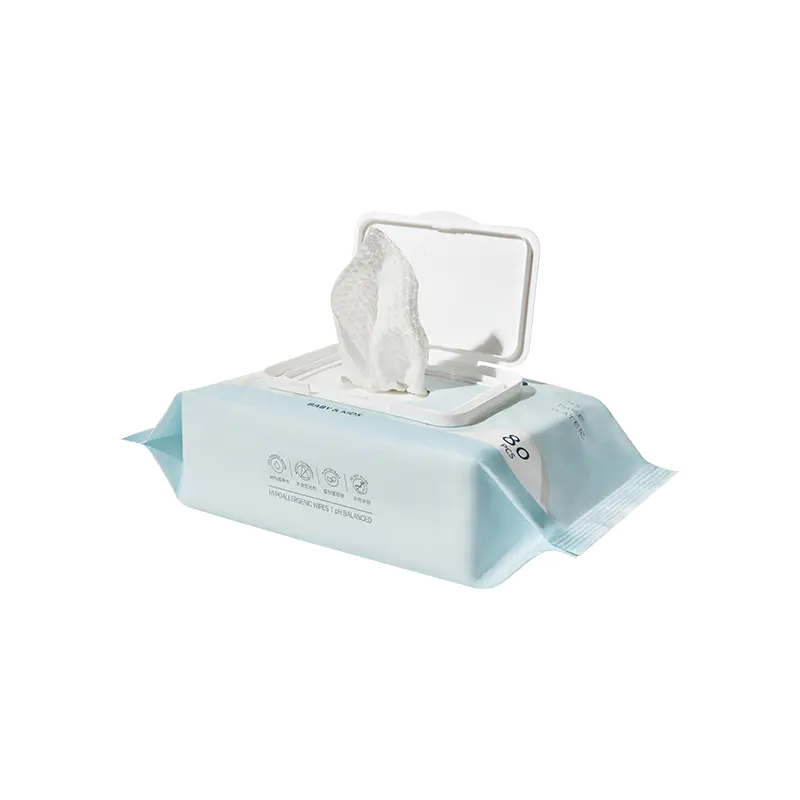 Medical-Grade Pure Water Baby WipesFragrance-free baby wipes with up to 99.9% purified water and soft cotton nonwoven, available for ODM/OEM and private-label programs.View Product →
Material choice matters less than the formula in the first weeks. Water-based, fragrance-free wipes with a short ingredient list are generally the safer starting point, and medical advice should take priority for premature or medically fragile babies.
Rarely quickly. Landfill is compacted and oxygen-poor, so even plant-based wipes degrade slowly. Industrial or home composting is a better route where it is available, but the largest practical gain comes from using fewer wipes and choosing plastic-free packaging.
No. "Unscented" can mean a masking fragrance was added to neutralize odour, while "fragrance-free" should mean no fragrance at all. Ask the supplier to confirm it in writing.
Many parents do, and it works well at home. Disposable wipes still earn their place away from a sink, during illness, and in those first weeks when laundry is the last thing anyone needs.
The best eco-friendly baby wipes for sensitive skin are rarely the ones with the most badges on the pack. They are the ones with a substrate you can verify, a formula short enough to understand, and packaging somebody actually thought about. Read the back, ask two questions, and buy the small pack first. That habit is worth more than any single recommendation, and it is exactly the conversation we enjoy having with the people we make wipes for.

Wet Wipes OEM/ODM, Custom Wet Wipes Manufacturers in China. We are making wet wipes enter every household and become an essential part of our daily life, and are making unremitting efforts to create a cleaner and more comfortable home environment.
Read MoreFor exclusive deals and latest offers, sign up by entering your email address below.


 English
 русский
 عربى