

 2026.09.28
 Industry News
Content
Bamboo baby wipes are usually summed up in three words on the front of the pack: soft, plant-based, gentle. That is enough for a label, but it is not enough for a decision. Most parents who go looking for bamboo baby wipes product info and reviews are trying to answer a much narrower set of questions. Does the fabric really come from bamboo? What is soaked into it? Do the people who bought it still like it after a month of nightly changes?
We build wet wipes, including baby wipes, for brands, retailers and distributors, so we see both halves of this topic at close range: how the product is actually made, and how reviews behave once it leaves the factory and reaches a shopping cart. This article covers both, without the marketing gloss.
Bamboo does not arrive at a wipe factory as a leaf or a strip of cloth. It arrives as pulp, which is converted into regenerated cellulose fiber, carded into a light web, and then bonded with high-pressure water jets into what the industry calls spunlace nonwoven. The result behaves like a very thin textile rather than paper, and that difference explains most of its popularity.
The fiber itself has a fine, smooth surface, which is why bamboo-blend wipes tend to feel slightly silkier than standard polypropylene wipes and less likely to drag across delicate skin. It also holds liquid well, so a bamboo sheet can stay comfortably damp without feeling soaked. For a nursery, those two properties matter more than almost anything else.
It is worth being candid about the environmental story, because it is often oversold. Bamboo is a fast-growing grass and is frequently presented as a lower-input crop, but that claim concerns farming rather than the finished wipe. Biodegradation depends on the whole sheet, not just the fiber name. A pure bamboo or bamboo-cotton spunlace breaks down far faster than a blend loaded with polypropylene, and the widely quoted "days to biodegrade" figures come from specific laboratory or industrial composting conditions that a household bin will not reproduce.
| Material | Hand feel | Liquid retention | Biodegradation tendency | Where it fits |
|---|---|---|---|---|
| Bamboo viscose spunlace | Soft, silk-like | High | Relatively fast | Sensitive skin, plant-based brands |
| Cotton spunlace | Soft, slightly textured | High | Fast | Newborn and premium lines |
| Polypropylene and viscose blend | Drier, more abrasive | Medium | Slow | Household and industrial cleaning |
| Wood pulp or airlaid | Papery | Very high | Fast | Kitchen and floor towels |
A short ingredient block is not the same as real product information. When we prepare specification sheets for customers, these are the fields that decide whether a wipe is genuinely suitable for a baby's skin or merely labelled that way.
If a product page answers six or seven of these points, it is probably written by someone who understands manufacturing. If it answers none of them, the reviews become your only remaining source of evidence.
Reviews are useful, but they measure a different thing than a specification sheet. They measure lived experience: how the pack opens at 3 a.m., whether the last sheet in the stack is still wet, whether a rash appeared after a week. Read them for those details and they are genuinely valuable.
Read them for certification claims, batch consistency or regulatory compliance and they will mislead you, because a single buyer sees one production run. Two packs bought six months apart may come from different fiber lots and different solution batches, and no consumer review can detect that.
A practical habit: sort by lowest rating first. Positive reviews tell you what the product promises; critical reviews tell you where it fails under pressure.
A wipe is assembled in four stages. The nonwoven roll is unwound and folded to the right width. The solution, usually water plus a small preservative system and skin-conditioning agents, is prepared in a separate tank and metered onto the fabric. The saturated web is cut and stacked to the correct sheet count. Finally the stack is sealed into a flow pack or a hard-lid tub.
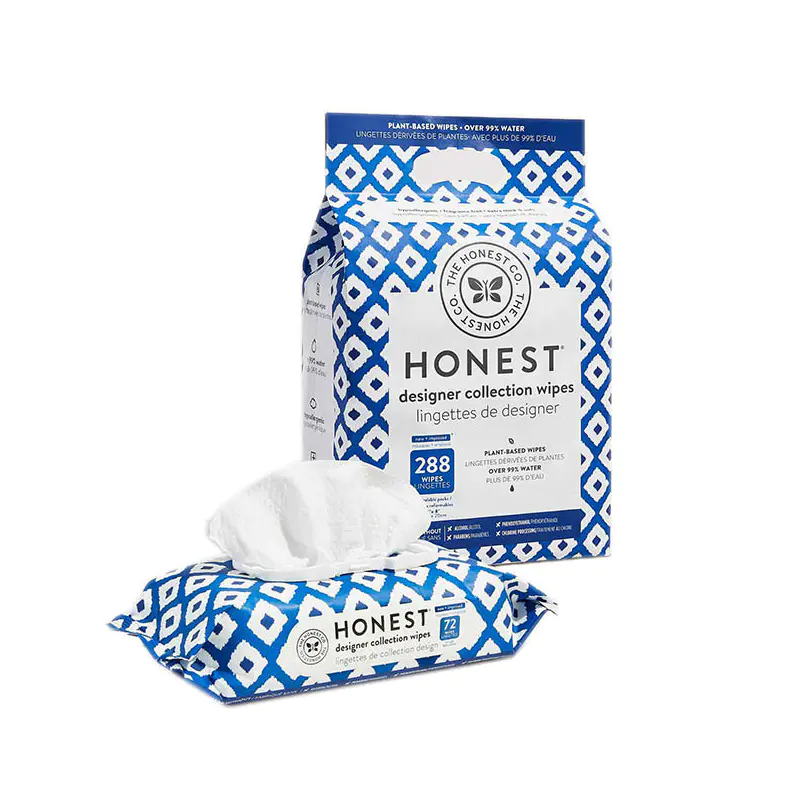 Natural Cotton and Biodegradable Bamboo Fiber Baby Wipes for Sensitive SkinWe know that every wipe for babies with sensitive skin is a vital care. Therefore, we are obsessed with the purity of raw materials and select 100% natural cotton and ...View Product →
Each stage has a failure mode that shows up later in reviews. Over-saturation makes packs heavy and leaky. Under-saturation leaves the bottom sheets dry. Poor sealing loses moisture within weeks. That is why we keep solution preparation and converting under the same roof, and why we keep technical staff on the floor rather than in a separate building. Our own plant runs automated lines with a daily capacity above 600,000 pieces, and the same equipment handles baby wipes, household wipes and industrial wipes, which is a useful reminder that softness is a deliberate choice rather than a default setting.
Most of the wipes we produce leave the factory under someone else's brand. Brands come to us with a target retail price, a fiber preference and a skin-positioning statement, and we work backwards to a sheet weight, a solution formula and a pack format that can actually deliver it. If you would like to see how the rest of that range is organised, you can browse the cleaning products we manufacture for our partners.
Baby wipes generally follow one of two philosophies. The minimal school keeps the solution as short as possible: purified water, a tiny amount of preservative, perhaps a pH buffer. The botanical school adds aloe, chamomile, oat or plant extracts for a softer after-feel and a more appealing scent story.
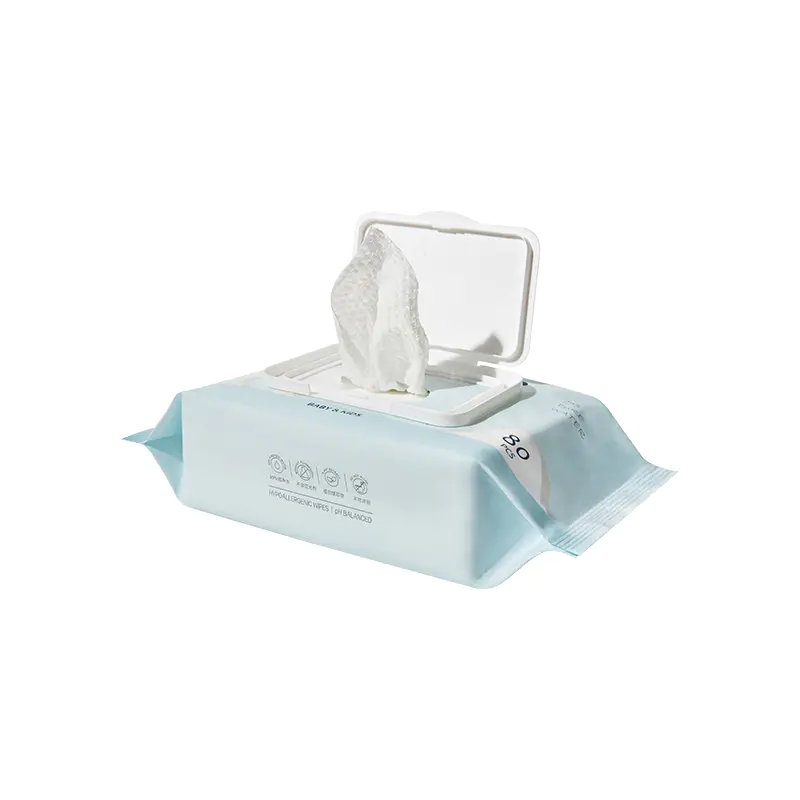 Baby Medical Grade Pure Water WipesDedicated to Babies with Delicate Skin — A Simple, Pure Safe ChoiceView Product →
Neither is automatically better. For the first weeks of life, when skin is still developing its barrier, many clinicians and parents prefer the shortest possible ingredient list, which is where medical-grade pure water wipes sit. As the baby grows and skin becomes more resilient, a lightly conditioned bamboo or cotton wipe often becomes the more practical everyday option, especially for face and hand cleaning between changes.
Whichever route you take, the deciding factor is usually the combination of fiber and solution, not the marketing category. If you want a deeper walkthrough of what to check on the label, our team wrote a plain-language summary of baby care wipes safety that covers the points parents ask about most.
The same eight questions work whether you are a parent holding one pack or a buyer evaluating a supplier for a private-label programme.
Suppliers who answer these without hesitation are usually the ones with a stable process. Suppliers who answer vaguely are usually reselling someone else's production.
Bamboo baby wipes are a genuine material category, not a marketing invention: bamboo pulp becomes regenerated cellulose fiber, which is bonded into a soft, absorbent spunlace sheet. Whether a particular pack is worth buying comes down to four things you can verify — the fiber blend, the water and preservative system, the sheet weight, and the packaging seal.
Reviews are best used for the things specifications cannot measure, such as wetness at the bottom of the stack and how the lid behaves after fifty openings. They are a poor substitute for a specification sheet, and a very poor substitute for asking the manufacturer directly.
If you are a parent, start with the label, then read the one-star reviews, then decide. If you are a brand or distributor building a bamboo baby wipe line, start with the fiber and the solution formula, and let the packaging follow. The rest — the scent, the colour, the shelf appeal — is easier to change than a base sheet that was never soft enough in the first place.

Wet Wipes OEM/ODM, Custom Wet Wipes Manufacturers in China. We are making wet wipes enter every household and become an essential part of our daily life, and are making unremitting efforts to create a cleaner and more comfortable home environment.
Read MoreFor exclusive deals and latest offers, sign up by entering your email address below.


 English
 русский
 عربى
عربى