

 2026.10.10
 Industry News
Content
Ask ten people what a bamboo kitchen towel is and you will probably get two very different answers. Some will describe a soft, washable sheet that stands in for paper towels, gets rinsed, and lands in the laundry basket at the end of the week. Others will point to the roll sitting next to the sink, the one you tear off without thinking and drop into the bin with the onion skins. Both products lean on plant-based fibers, both get sold under the word bamboo, and yet they behave nothing alike once they meet a spill.
We have been manufacturing wet wipes and dry towels since 2003, supplying airlines, hotels and private-label brands from our factory in Haining, Zhejiang. That background gives us a practical rather than a poetic view of this category, so this guide walks through what bamboo kitchen towels actually are, how the reusable and disposable versions compare, and what is worth checking before you buy by the case.
The phrase covers two families of products that happen to share a fiber story. Strictly speaking, a bamboo towel contains bamboo fiber, most often bamboo viscose and occasionally a mechanically processed bamboo pulp. Which type you are holding decides whether the towel is built to survive a washing machine or designed for a single wipe and a bin.
Reusable versions are cut from a thicker, denser fabric, frequently a bamboo-cotton or bamboo-viscose blend. They come as a roll of perforated sheets that snap apart or as loose packs, and many makers suggest somewhere between 50 and 100 washes before the fabric loses its softness. In the hand they feel much closer to a thin cloth than to paper, which is precisely the idea: you rinse, wring and hang them to dry.
The roll you tear off is usually not bamboo at all. Wood pulp, viscose, polyester-viscose blends and spunlace nonwoven dominate this shelf, mainly because they hold together when wet and cost less per meter to produce. When bamboo does appear in a disposable towel it is normally blended with wood pulp to add softness without sacrificing wet strength. That blend is a reasonable compromise: the sheet stays strong enough to wipe a countertop and still breaks down more readily than a purely synthetic fabric.
Neither option is universally better. The right answer depends on what you are wiping, how often, and whether washing a cloth fits your routine at all.
| Feature | Reusable bamboo towels | Disposable kitchen towels |
|---|---|---|
| Typical fiber | Bamboo viscose, often blended with cotton | Wood pulp, viscose, spunlace nonwoven |
| Lifespan | Roughly 50 to 100 washes | Single use |
| Absorbency | Good once dampened; slightly slick when new | Fast and even, tuned for one pass |
| Wet strength | Depends on fabric weight and weave | Higher when pulp content is balanced |
| Best for | Drying hands, light spills, dusting | Grease, food prep, sanitation, raw juices |
| Care | Machine washable, air dry | Not washable |
| Cost pattern | Higher upfront, lower over months | Low upfront, steady repeat purchase |
Two towels can carry the same bamboo wording and still feel completely different, because the fiber recipe and the bonding method do most of the work. Bamboo viscose is soft, takes dye well and drapes nicely, which is why it shows up in reusable cloths. Wood pulp absorbs quickly and cheaply, which is why it anchors most disposable kitchen rolls. Cotton is durable and heat tolerant, so it works well near a hot pan, but it dries slowly. Spunlace nonwoven, made by entangling fibers with high-pressure water jets, delivers a cloth-like hand feel with consistent thickness, and that consistency is what commercial kitchens and airlines are really paying for.
For buyers who want a disposable option with a lighter environmental footprint, one of the products we make for customers is a multifunctional kitchen towel built on biodegradable wood pulp fiber, designed to work both damp and dry.
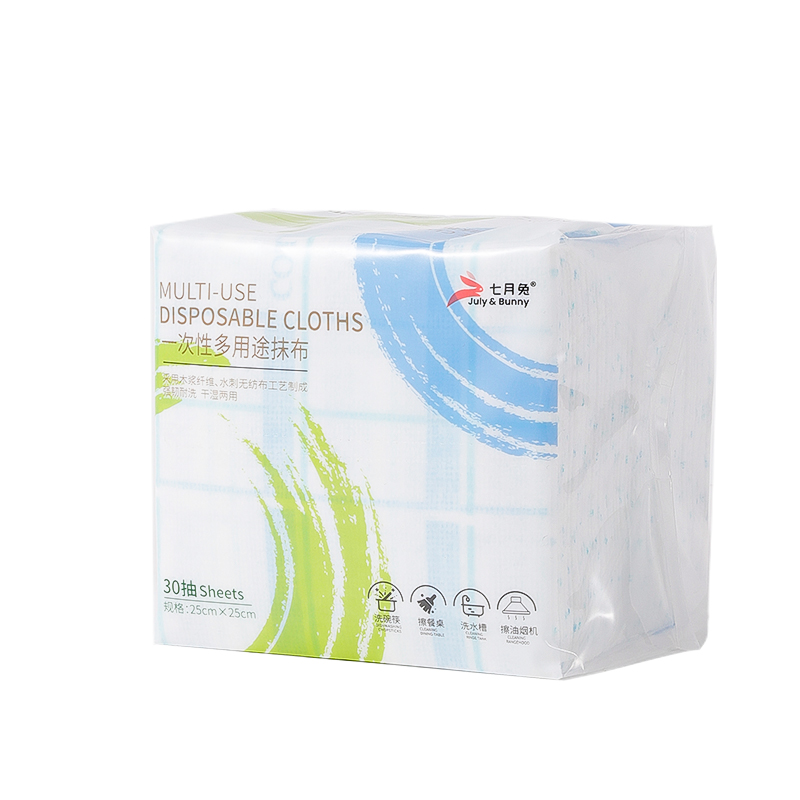 Disposable Wood Pulp Fiber Kitchen Towels for WholesaleFor wholesale buyers seeking a disposable, lighter-footprint option, this wood pulp fiber towel is described as strong wet or dry and naturally degradable.View Product →
A short checklist saves a lot of trial and error, whether you are outfitting one kitchen or planning a product line.
A kitchen towel has one job description: pick up liquid and hold it long enough to reach the sink. Absorbency is largely a function of fiber type, fiber fineness and how the sheet is bonded, while wet strength comes from the pulp-to-synthetic ratio and the bonding pattern. Push absorbency too far and the sheet turns limp; push wet strength too far and it starts pushing liquid around instead of soaking it up. Water-corrugated nonwoven is a good example of the middle ground, where a textured surface lifts residue and the embossed pattern keeps the sheet from collapsing when saturated.
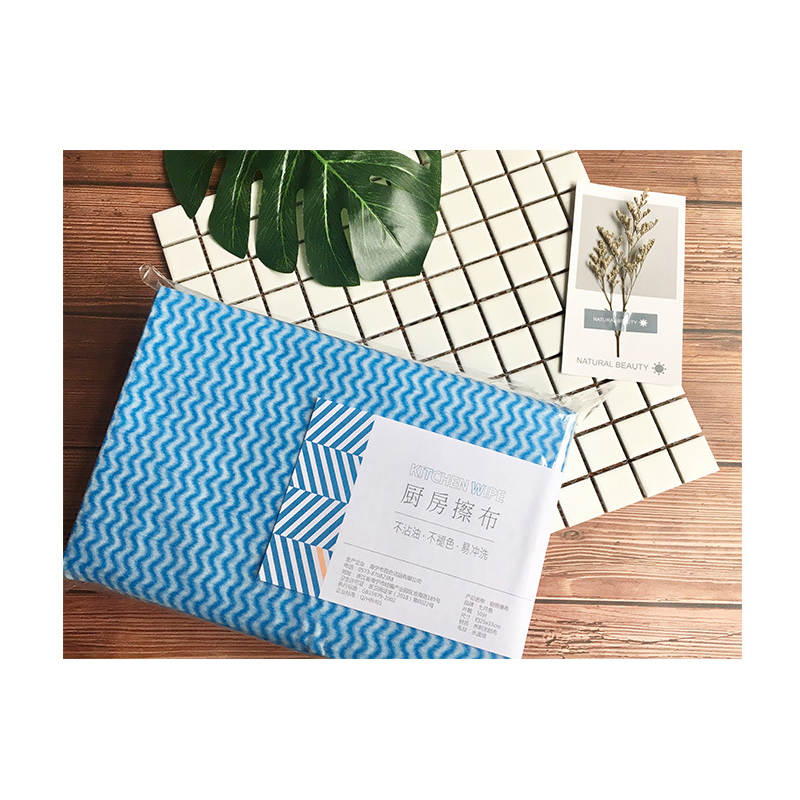 Water Corrugated Non-woven Kitchen Towels for Grease CleaningThis water-corrugated non-woven towel is designed for stubborn kitchen grease, with an embossed texture to help lift residue and durable, absorbent performance.View Product →
Reusable sheets are only the greener choice if they survive a decent number of cycles. A few habits make a measurable difference.
Once you move past the home kitchen, three questions dominate: fiber specification, MOQ and packing format. Restaurants typically want a consistent sheet that will not fall apart on a greasy pass, delivered on a predictable schedule. Brands building a private-label line care more about the story on the pack, the sheet count, the roll diameter and how the towel photographs. Both groups should ask for samples from the actual production run rather than a hand-made prototype, because bonding and perforation behave differently at line speed.
If you would like to see how we handle this kind of work, our company background and production setup are a reasonable place to start. For everyday kitchen habits that make a towel last longer and work harder, this piece on tips for smarter, cleaner cooking is worth a read.
Some buyers, particularly in beauty and personal care retail, prefer a cotton-based sheet for its softer hand feel and familiar look on shelf. That is a different product from a bamboo kitchen towel, but it often sits in the same shopping basket.
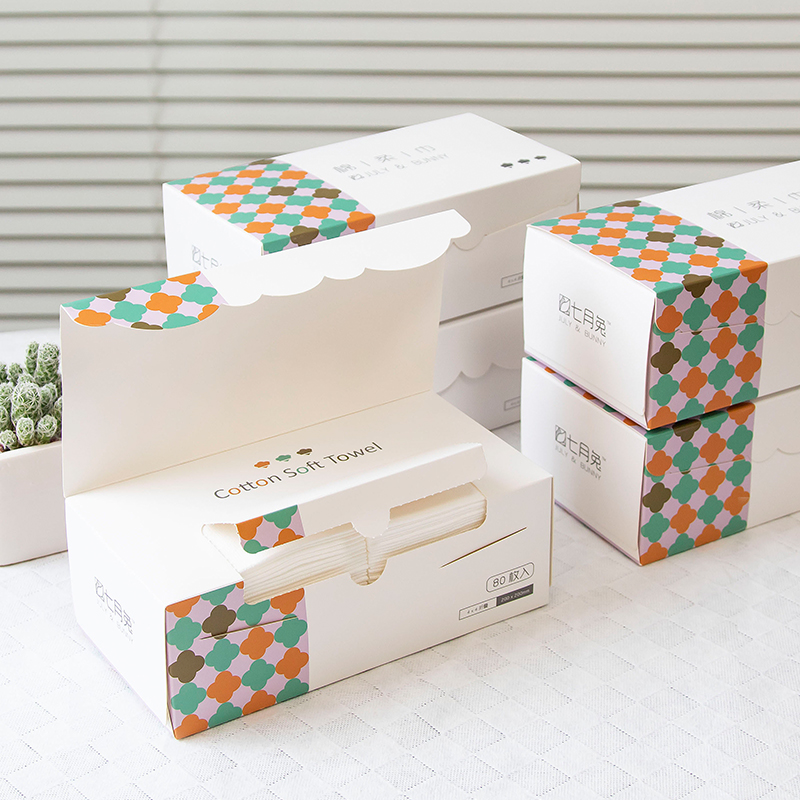 Disposable Pure Cotton Face and Personal Care TowelsA 100% cotton spunlace disposable towel for cleansing, makeup removal, or baby care, described as soft, skin-friendly, and available in single-piece packaging.View Product →
Not automatically. A well-made cotton towel usually absorbs more per square inch than a thin bamboo-viscose sheet. Bamboo tends to dry faster and feel softer, which many people prefer for hands and glassware.
Only if the fiber blend and binder allow it. Wood pulp rich towels break down far more readily than blends with a high synthetic share, and most home compost bins are slower than industrial conditions.
As a rough rule, a set of around a dozen reusable sheets covers the wiping a household would otherwise do with several rolls, provided you actually wash and reuse them.
Bamboo kitchen towels work best when you stop treating them as one category. Reusable sheets are a laundry item that happens to live in the kitchen, while disposable towels are a hygiene product that happens to look like cloth. Pick the version that matches the job in front of you, read the fiber list before you trust the front of the pack, and buy a small quantity first. Twenty years of running production lines has taught us that the towel people keep buying is rarely the fanciest one on the shelf. It is the one that does its job without making a mess of yours.

Wet Wipes OEM/ODM, Custom Wet Wipes Manufacturers in China. We are making wet wipes enter every household and become an essential part of our daily life, and are making unremitting efforts to create a cleaner and more comfortable home environment.
Read MoreFor exclusive deals and latest offers, sign up by entering your email address below.


 English
 русский
 عربى
عربى