

 2026.08.28
 Industry News
Content
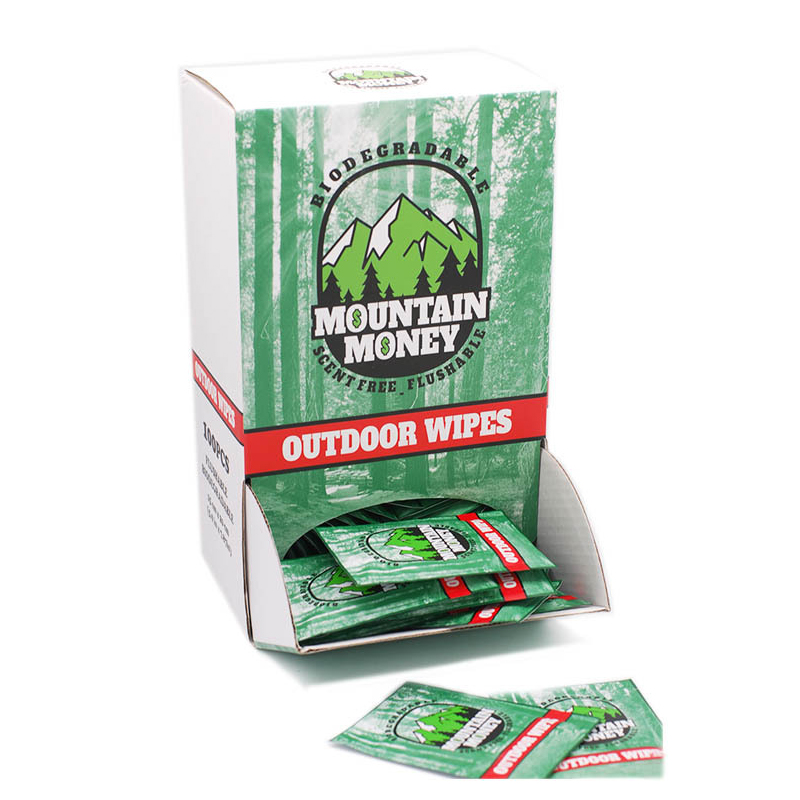
Pull a wipe from your bag, swipe both lenses, done — for millions of glasses wearers, that five-second ritual happens at a red light, between meetings, or right after stepping off a plane. So are lens wipes safe for glasses? Yes, purpose-made lens wipes are safe for modern eyeglasses, including anti-reflective and scratch-resistant coatings, provided the wipe is formulated for optics and used with a light touch. The damage reports you read online almost always trace back to one of three culprits: a general-purpose disinfectant wipe standing in for a lens wipe, a dried-out or reused wipe dragging grit across the surface, or the habit of wiping a dusty lens dry. Understanding those three failure modes tells you exactly what to buy and how to wipe.
Almost every lens sold today carries more than one coating. Anti-reflective layers cut glare, hydrophobic topcoats shed water and oil, and hard coats resist everyday abrasion. These layers are where nearly all visible lens damage shows up first: haze, dull patches, or fine scratches that no cleaning can reverse. The safety question is really a coating question.
The fear around alcohol is understandable but often overstated. Pure, high-strength alcohol is genuinely hostile to some coating systems, and that warning is legitimate. Wipes marketed as lens wipes, however, use a controlled, diluted formulation — typically purified water with a measured amount of isopropyl alcohol and a mild surfactant — designed to evaporate quickly without attacking the coating. Manufacturers of quality lens wipes formulate and test against coated lenses, which is precisely what separates them from general disinfectant wipes carrying stronger actives and leaving residue films on glass.
The quieter threat is mechanical, not chemical. A grain of dust dragged across a lens under finger pressure leaves a micro-scratch no matter how soft the wipe material is. No formulation can prevent that; only technique can. Keep this in mind, because it explains most of the "wipes ruined my lenses" stories in forums — the wipe was rarely the whole problem.
Label reading does most of the work. A proper lens wipe states that it is made for eyeglasses and coated lenses, and many add an explicit note about anti-reflective compatibility. Beyond that, five checkpoints separate a real lens wipe from an improvised one:
For perspective on what people actually reach for, the table below compares the common options on coated lenses:
| Wipe Type | Typical Formulation | Coated-Lens Safety | Main Risk |
|---|---|---|---|
| Purpose-made lens wipes | Controlled isopropyl alcohol level or water-based lens solution on a soft lint-free nonwoven | Safe when labeled for anti-reflective coatings | Streaks on oily lenses; abrasive once the sachet dries out |
| General disinfectant wipes | High-strength alcohol or quaternary ammonium compounds | Not designed for optics | Residue film; gradual coating dulling with repeated use |
| Household surface wipes | Detergents, fragrances, sometimes ammonia | Not recommended | Chemical haze and coating damage |
| Dry tissue or clothing | No cleaning solution at all | Unsafe on dusty lenses | Micro-scratches from trapped particles |
The pattern is consistent: only the category built for optics controls both the chemistry and the fabric. Everything else trades lens life for convenience.
Even a well-made wipe can scratch a lens when the technique is wrong. The routine eye care professionals recommend comes down to five rules:
Done this way, a lens wipe removes skin oils, fingerprints, and airborne grime that a dry cloth only smears around.
Context decides the better tool. On a commute, on a flight, or between meetings, individually wrapped lens wipes are the safest portable option — much safer than a shirt corner and far safer than a tissue. Regular tissues are wood pulp that is abrasive at a microscopic level, and dry paper drags grit in straight lines across the coating, which is why regular tissue damages your lenses even when the glass looks clean afterward.
At home, the gentlest daily routine is still free: lukewarm water, a drop of lotion-free dish soap, a gentle fingertip rub, a thorough rinse, and a clean microfiber cloth. Water carries grit away without friction, which is why eye care professionals treat the sink method as the default and position wipes as the on-the-go complement rather than a replacement. Sunglasses, safety glasses, and sports shields follow the same logic — the coating rules do not change with the frame.
Standard lens wipes handle grease and dust, but three everyday annoyances respond better to a matched formula.
Stepping out of air conditioning into humid air, wearing a face mask, or holding a hot drink in front of your face condenses micro-droplets across the lens. Wiping clears them for seconds, then they return. Anti-fog lens wipes deposit a transparent film that stops condensation from forming visible droplets in the first place; the effect lasts through several wears and is refreshed each time you clean.
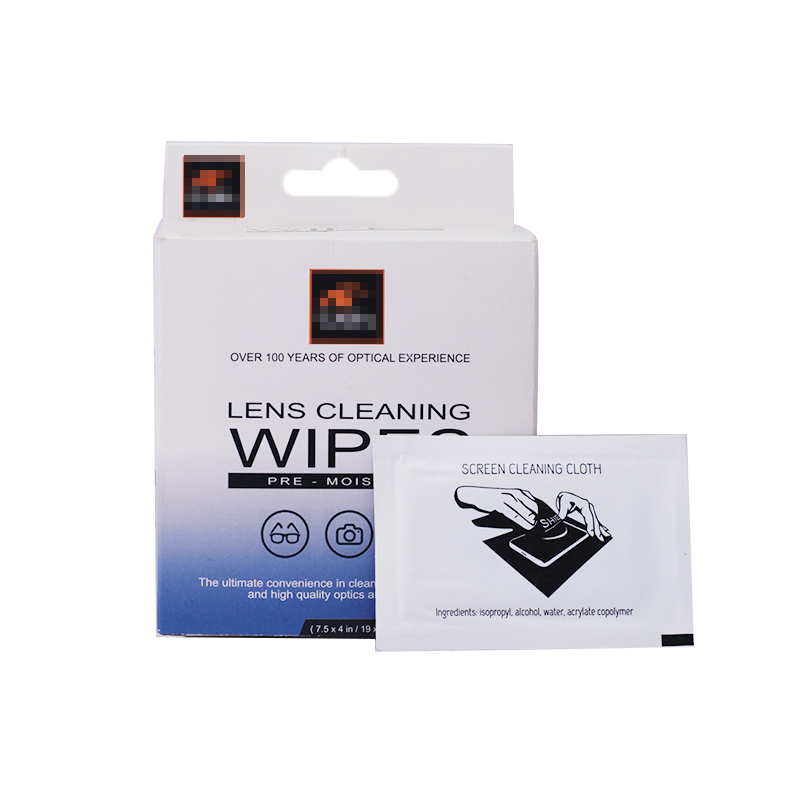 Anti-Fog Glasses and Screen Cleaning WipesThese alcohol-free wipes deposit a transparent hydrophilic film that stops fog droplets from forming, keeping glasses, goggles, and mask lenses clear through temperature changes and mask-wearing.View Product →
Plastic lenses and screens hold a small electrostatic charge that actively pulls dust back onto the surface you just cleaned. Anti-static wipes leave far less charged residue behind, so lenses and displays stay clean noticeably longer — a real difference in dry offices, in winter, and around electronics.
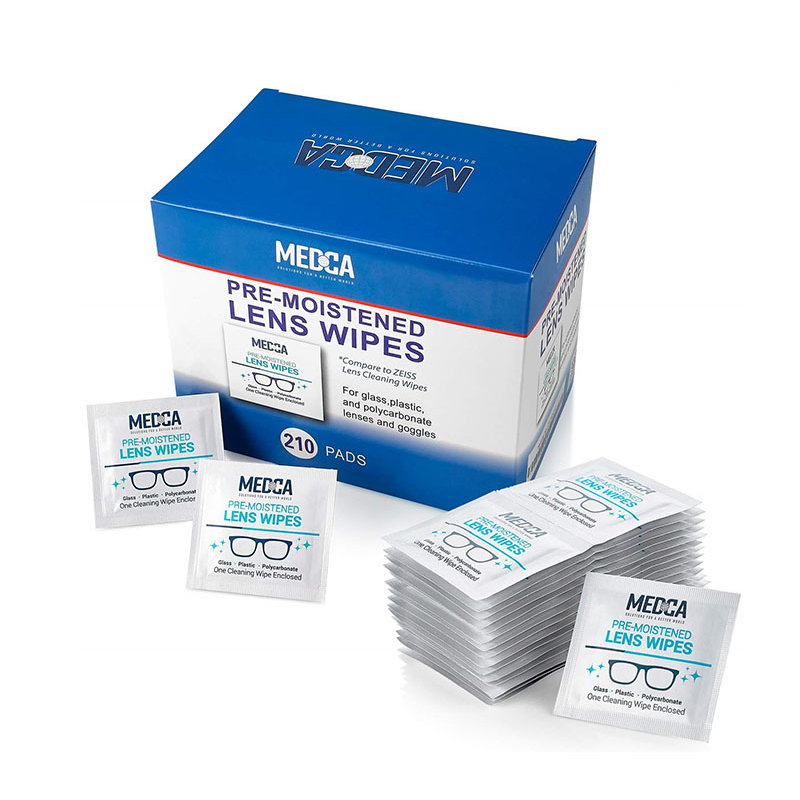 Anti-Static Glasses and Screen Cleaning WipesSoft lint-free wipes with a cationic anti-static agent reduce dust re-adhesion on lenses and screens, helping glasses, cameras, and displays stay clean longer in dry or electronics-heavy environments.View Product →
Display coatings are generally less tolerant than lens coatings, so sharing one pack between glasses, phones, and monitors is not automatically safe. Before you do, it helps to understand how alcohol, water, and alcohol-free screen wipes differ, because the right choice depends on the device and its coating.
The short version: lens wipes are safe for glasses when three things line up — a wipe formulated for coated lenses, a fresh sealed sachet, and a light hand that respects debris. Check the packaging for optics use and anti-reflective compatibility, keep a microfiber cloth in the case, and let water and dish soap handle the deep clean at home.
The same checkpoints matter one level up the supply chain. For retailers, optical chains, and brand owners planning a private-label lens wipe, the specifications to confirm with a wet wipes manufacturer are exactly these: solvent type and concentration, lint-free nonwoven grade, individual sachet sealing, and coating-safety testing. Get those four right, and the five-second wipe at a red light stays as harmless as it feels.

Wet Wipes OEM/ODM, Custom Wet Wipes Manufacturers in China. We are making wet wipes enter every household and become an essential part of our daily life, and are making unremitting efforts to create a cleaner and more comfortable home environment.
Read MoreFor exclusive deals and latest offers, sign up by entering your email address below.


 English
 русский
 عربى
عربى