

 2026.04.10
 Industry News
Content
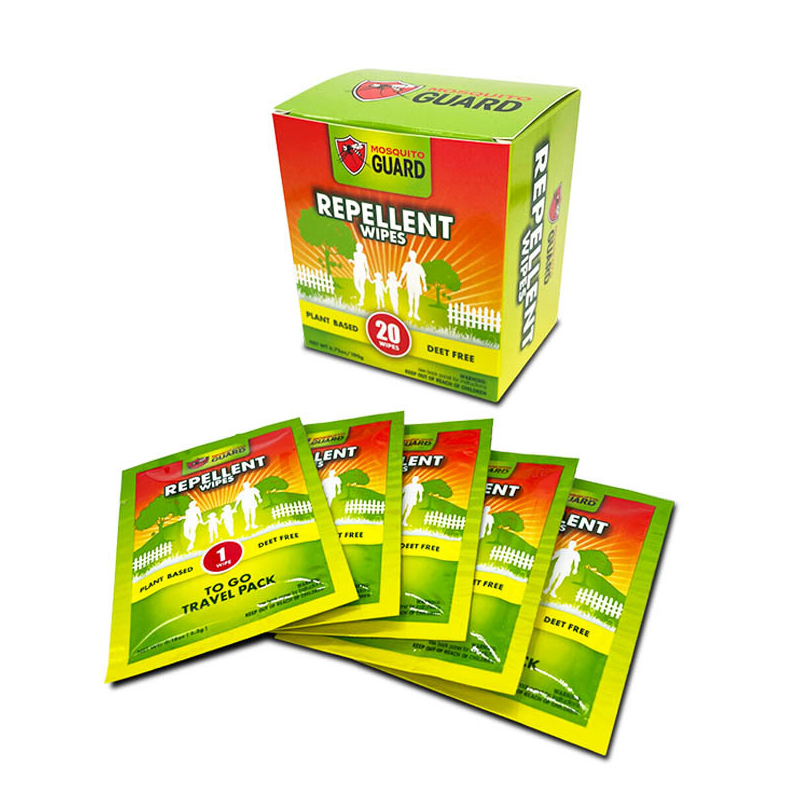
Mosquito repellent wipes are pre-saturated, single-use towelettes infused with active insect-repelling ingredients. Each wipe delivers a measured dose of repellent directly onto exposed skin, offering the same protection as a spray or lotion in a format that is cleaner, more portable, and easier to apply with precision.
Unlike aerosol cans or pump bottles, mosquito repellent wipes are individually wrapped, making them ideal for outdoor adventures, travel, hiking, camping, and everyday use in mosquito-prone areas. There is no risk of over-spraying, no dripping, and no need to wash your hands after application — just wipe, fold, and discard.
They are available in a wide range of formulations: from high-strength DEET-based options designed for deep jungle environments, to gentle plant-based blends suited for family use in the backyard. The format is the same across all types; what varies is the active ingredient and the level of protection it delivers.
Mosquito repellent wipes work by depositing a thin layer of active chemical or botanical compounds onto the surface of the skin. These compounds interfere with the sensory receptors mosquitoes use to locate human hosts — primarily the ability to detect carbon dioxide, body heat, and specific skin odor compounds like lactic acid and ammonia.
When the repellent layer is intact, mosquitoes either cannot locate the treated skin or are actively deterred from landing on it. The protection is time-limited: as the active ingredient evaporates or is washed away by sweat or water, the barrier weakens and reapplication becomes necessary.
For a detailed breakdown of how different formulations compare in real-world conditions, see our guide on whether mosquito repellent wipes really work. The short answer is yes — when the right active ingredient is used at the right concentration and reapplied at the correct interval, wipes are as effective as any other topical repellent format.
The nonwoven or cellulose substrate of the wipe plays a supporting role: it must hold enough saturation to deliver an effective dose per wipe while releasing the formula evenly onto skin without excessive residue. A well-engineered wipe substrate is not a passive carrier — it actively determines how consistently the active ingredient is delivered.
The active ingredient is the single most important variable in a mosquito repellent wipe. The three major categories — DEET, Picaridin, and plant-based essential oils — each offer a distinct combination of efficacy, duration, skin feel, and suitability for different users.
| Active Ingredient | Typical Concentration | Protection Duration | Skin Feel | Best For |
|---|---|---|---|---|
| DEET | 10%–30% | 4–8 hours | Can feel oily; may irritate sensitive skin | High-risk areas, tropical travel, prolonged outdoor exposure |
| Picaridin | 10%–20% | 6–10 hours | Light, non-greasy, odorless | Everyday use, warm climates, users sensitive to DEET |
| Natural Oils (citronella, lemongrass, rosemary, etc.) | Varies by blend | 1–2 hours | Lightweight, pleasant scent | Low-risk environments, children, users preferring DEET-free options |
DEET remains the most widely studied and highest-efficacy option, recommended by the CDC for areas where mosquito-borne diseases such as dengue, Zika, and malaria are present. Picaridin has closed the gap in recent years — it matches or exceeds DEET's duration with a far more comfortable skin feel and no risk of damaging plastics or synthetic fabrics on contact.
Natural oil formulations appeal to consumers who want a chemical-free alternative. Their main limitation is protection duration: most natural blends require reapplication every 60 to 90 minutes. For low-intensity use — a garden party, a short evening walk, a weekend market — this is entirely acceptable. For jungle trekking or a full day on a tropical beach, it is not.
Mosquito repellent wet wipes are not simply a gimmick version of the spray bottle. In several real-world scenarios, the wipe format offers genuine, practical advantages that sprays and lotions cannot match.
The effectiveness of a repellent wipe depends as much on correct application as on the active ingredient itself. Inconsistent coverage or missed areas are the most common reasons users report bites despite using repellent.
The most common application mistake is treating only the most obvious areas and assuming coverage is complete. Ankles, the back of the knees, and the ears are frequently missed and disproportionately targeted by mosquitoes. A second wipe covering the lower body is often worthwhile for full-day outdoor exposure.
For most children aged 2 months and older, mosquito repellent wipes are safe when used as directed. However, the appropriate formulation depends on the child's age and skin sensitivity.
The EPA and CDC approve DEET concentrations up to 30% for use on children over 2 months of age — the concentration affects duration of protection, not safety. Picaridin at 10%–20% is widely considered equally safe and is often preferred for children due to its milder skin feel and neutral scent. Natural oil formulations are generally considered appropriate for young children, though their shorter protection windows require more frequent reapplication.
For infants under 2 months, no topical repellent — wipe or otherwise — is currently recommended. Physical protection such as mosquito nets and protective clothing is the advised approach for this age group.
When applying wipes to young children, always use the wipe on your own hands first and transfer to the child's skin — never allow a child to handle the wipe directly. Avoid the hands, since children frequently put their hands in their mouths. Parents seeking a gentle, skin-tested wipe format for daily use may also find value in reviewing our baby wipes range, formulated specifically for infant-grade skin sensitivity standards.
Children with eczema, psoriasis, or other skin conditions should be evaluated by a pediatrician before any topical repellent is used.
For brand owners, retailers, and distributors looking to develop a private-label mosquito repellent wipe product, the sourcing decision involves far more than selecting an active ingredient. The following criteria should guide the evaluation of any OEM manufacturing partner:
Mosquito repellent wipes sit at the intersection of personal care and regulated pesticide products. A manufacturing partner with experience in both categories — and the quality systems to match — is the foundation of a compliant, market-ready product. Getting this sourcing decision right from the start avoids the costly process of reformulating or re-certifying later.

Wet Wipes OEM/ODM, Custom Wet Wipes Manufacturers in China. We are making wet wipes enter every household and become an essential part of our daily life, and are making unremitting efforts to create a cleaner and more comfortable home environment.
Read MoreFor exclusive deals and latest offers, sign up by entering your email address below.


 English
 русский
 عربى
عربى